A recent plea by farmers to get a fair price for milk has highlighted two things: what is fair and what is fair dinkum?
It seems ‘fair’ is a notion best described by the Australian expression from World War I where soldiers exchanged gossip behind the sanitary carts as a furphy.
The problem started when the major supermarkets introduced milk at $1.00 per litre. It meant that dairy processors slashed farm gate prices from $5.50 per kilo to around $4.75 per kilo. For a lot of farmers, it meant milking and feeding the cows to be more expensive than what they get back. It is predicted that many of the 6000 dairy farmers will go belly up, and to pile misery onto an already sour situation, the New Zealand giant Fonterra backdated the price cuts telling farmers to hand back the ‘overpayments’.
It hardly seems fair. As K. E. Boulding describes fairness in his book The Organisational Revolution: The concept of a fair day’s work, as well as that of a fair day’s pay, plays an important role in modern industrial disputes. The phrase is bandied about freely by trade unions and managements and both sides think that they know what they are talking about. Yet the notion of a fair day’s work is something of a will-o-the-wisp—the more closely one examines it, the more elusive does it become.
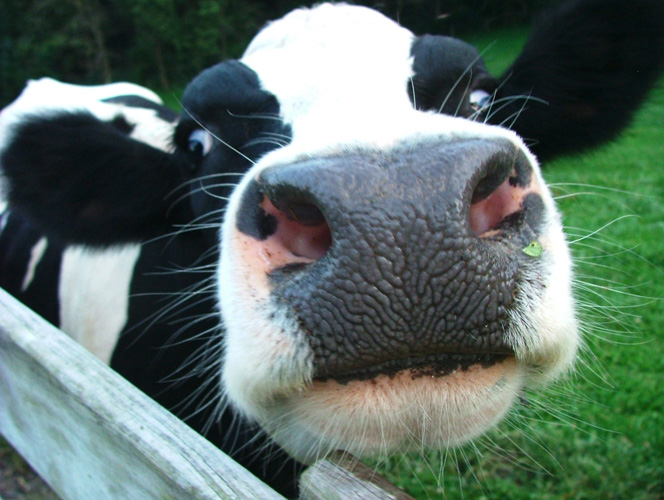
But this is the lucky country whereby if one works hard they will reap the benefits of their labour, won’t they? Perhaps it should now be called the country formerly known as lucky. In an article from the Labour Standard of 1881, fairness for work is described as, The workman gives as much, the Capitalist gives as little, as the nature of the bargain will admit. This is a very peculiar sort of fairness. So there we have a definition stating that working for a fair day’s pay is peculiar. Try telling that the Holstein Friesians as they line-up patiently in the early morning mists waiting their turn to be the cows that milked the supermarkets—or should that be the other way around.
The big supermarket chains are crying that they’ve been unfairly labelled baddies because they do not control farm gate prices. The reason farmers are being ripped off unfairly is because of a collapse in global milk prices. This is due to Russia announcing a trade embargo on dairy products from the West. The Cold War has escalated to the Milk War. Now, not only does the farmer have to put up with not having enough money to pay the banks, they must be wary of spies in the herd, especially the ones wearing ushankas. And don’t forget the cow that came in from the cold.
Which all sounds a bit far-fetched, but when you consider China is building a dairy farm that is a cow metropolis—one hundred thousand cows in the city of Mudanjiang, fifty times bigger than the biggest in the UK, and three times bigger than anything in the US. All rather peculiar as most Chinese people are lactose intolerant. The reason—Russia wants Chinese milk so Putin can stick it to the European Union producers after they called the Ukrainian Crisis a tad unfair.
In the meantime, the Australian government has offered low-interest loans to farmers who are already up to the eyeballs in debt. The offer is a bit like using good whisky to pour on fluffy slippers that just caught alight—ineffectual.
The end result makes no sense. If farmers are forced to walk away from their farms because the price offered to consumers is too little and the entire industry collapses, where will those of us who like a drop of milk on their Weet Bix get their milk from? The answer is pretty obvious, it will come from the same place we get our smart phones, activity trackers, and just about everything else, China. The Chinese word for ‘milk of cow’ is niunai, in case you don’t recognise the name in supermarket shelves in the near future.
The unfortunate casualties of any war, especially the Milk War, will be those mournful, bellow-in-the-night, lugubrious, soft-nosed, doe-eyed creatures—the cows themselves. A drop in the demand for milk means the cow must die.
Hardly fair at all in my books.
Sources:
Frank Chung news.com.au
Lucy Barbour abc.net.au
Dailymail.co.uk
 ajhenryblog