
Questions from the mug punter:
Gas and Capital Hill Flatulence
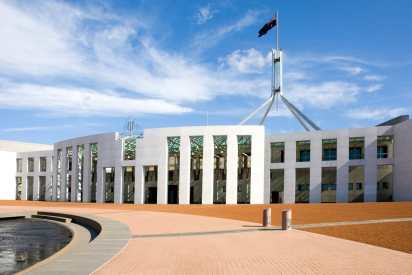
During a conference hosted by The Australian Financial Review, Prime Minister Malcolm Turnbull expressed his alarm over a report published by the Australian Energy Market Operator. It said the country is running out of gas supply.
How can this happen in a country that is the ninth largest energy producer in the world?
The PM went on to say, “What you need to do is deliver on outcome. What Australians want is a result. They want energy security, energy that is affordable, and we need to meet what we agreed in Paris.”
In November 2016 the United Nations Framework Convention on Climate Change (UNFCCC) met to hammer out an agenda to limit greenhouse gas emission. Parties to the convention agreed to implement measure to reduce carbon emission to around 55 per cent of current emissions.
With this in mind, Mr. Turnbull went on to say, “If the answer is ‘close down coal and move to gas’. Well, Where’s the gas?” A reasonable question when faced with the reality that over the next seven years aging coal-fired generating plants will shut down. Investors fear the construction of new ones as desirable as sinking money into a black hole—a coal mine no doubt.
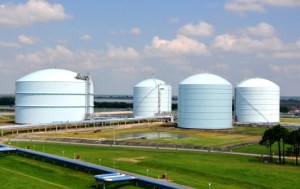
Where’s the gas and other questions have to be looked at in the context of the big island we inhabit. Australia has the largest deposits of gas on the planet. A $230 (AUD) billion investment in liquefaction and shipping facilities was pumped into LNG projects several years ago. Natural gas is regarded as a major energy source for the next century and Australia is full of it. It is estimated that the reserve is around 3.921 billion cubic meters. The problem is, we are not alone. The Untied States,
The problem is, we are not alone. The Untied States, Russia, and Qatar also have big reserves. The price of gas is pegged to oil prices and the movement has been mostly south.
Australia is flooding Asia with gas causing a regional glut. The price per gigajoule has collapsed. Japan buys gas (our biggest buyer) at half the price Australian manufacturers pay. The Minister for Energy Josh Frydenburg declared the wholesale price of (our) gas is being pushed up by demand for limited supply. Gas exporters, in attempting to meet contracts signed years ago, are raiding domestic supplies to fulfill contracts. It means the country with the most reserves of natural gas has none left to use at home.
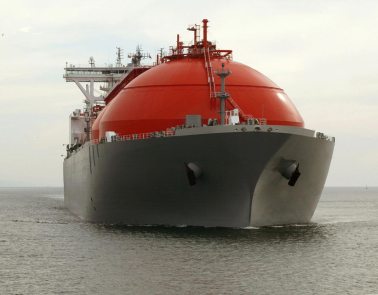
The simple answer to where’s the gas is that we give it away.
If this policy of largesse to the rest of the world is to be continued, then what are the alternatives? Mr. Turnbull in another statement said, “What we don’t want to do is pursue a 50 per cent renewable energy target like that of Bill Shorten and the Labor Party which will drive up energy prices and put at risk our energy security.”
The future electricity price across most of the country is set to rise. Closing down the coal-fired power station at Hazelwood in Victoria has sent the wholesale cost skyward. Energy prices are being driven up by the Coalition Government doing nothing—apart from contemplating where the gas went.
The mug punter queries renewable energy and wonders if it is as expensive and risky as the PM insists. Research from Bloomberg New Energy Finance shows that, even without a carbon price, wind energy remains 14 per cent cheaper than new coal-fired energy, and a whopping 18 per cent cheaper than new gas. Keep in mind this is in a country with the biggest reserves of gas.
As for its reliability, in the years 2010 to 2013 wind powered 31 per cent of electricity generated in the US. While the ever reliable sun rising at the dawn of each day accounted for 16 per cent of power.
The Coalition’s energy policies appear to be in a quandary. In saying they will honour the Paris accord, coal generation will give way to gas. There is no gas because it is exported. What gas is left for the local economy cost twice as much as what our Asian neighbours pay. Households are paying more for electricity. And yet the Government does not want to go the renewable path as it will drive up costs.
The one constant to be relied on is gas ever increasing on Capital Hill.
 ajhenryblog