

Punishment for crimes.
In the early centuries, those who committed a crime against the community was regarded as offending the gods. The gods would vent their displeasure in the form of floods or famine. The Bible says, lex talionis or ‘an eye for an eye and a tooth for a tooth.’ It means punishment for the crime should not spiral to personal revenge resulting in blood feuds but no greater than what befits the wrongdoing. Various societies sought ways to penalize criminals. Some, by today’s standards, seem bizarre and unjust. Here are just a few examples.

Ancient Egypt.
In the time of the Pharaoh Akhenaten, around 3,300 years ago, workers were brought in to construct temples and palaces for the sun god Aten. The laws were dished-out by the Pharaoh to stop wrongdoers from committing crimes such as theft. Most punishments were imposed upon the labourers.
Skeletons excavated from mass graves in 2015 revealed several things about the commoners living in that time. The vast majority did not live long, twenty-five years of age were old. Wounds to the shoulder blades on some skeletons confirm the Egyptian fable about the thief who stole an ox. The thief got 100 blows with a cane and five stab wounds to his back. Tax-dodgers were beaten while lying face down on the ground.
The penalty for grave robbing was an early death to their own grave.
Women did not escape punishment either. A woman committing adultery had her nose cut off to ruin her looks. If a man raped a woman, he was delivered a deterrent by swift castration.
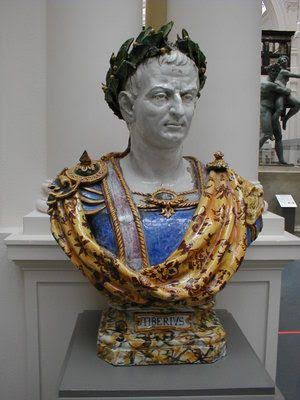
The Roman Empire
Romans took census time seriously. The king of Rome Servius Tullius decreed everyone must take part in the citizen count to get an accurate record of every citizen’s property to ensure they paid tax. The punishment for not taking part in the census was the confiscation of all property and the citizen sold into slavery.
No record exists of this punishment being carried out. The famous lawyer Cicero records the punishment of Publius Annius Asellus, who did not turn up at census time to evade inheritance law as losing his right to vote.
Older men in Roman households held the law. In the paterfamilias patriarchal system, the oldest male had the power to kill anyone in the home. Quintus Fabius Maximus Eburnus killed his son after discovering his ‘dubious chastity’. The law did not allow the head of the household to slay members of the family on a whim. As sexual matters were not generally considered a crime, Maximus Eburnus was tried and sent into exile.
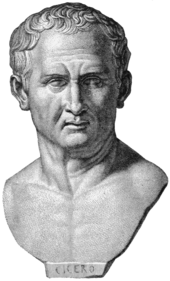
A crime against the state was a more serious offence. During the conspiracy of Catiline whereby his followers got together to kill the consul Cicero, Aulus Fulvius was slain by his father for his part in the plot but was not prosecuted.
By far, the most bizarre sentence was poena cullei, ‘punishment of the sack’. Anyone who killed their father or mother or relative was a dastardly crime called parricide. The jurist Modestinus records that the penalty for someone committing parricide was sewn in a sack with a dog, a rooster, a snake, and a monkey. If that wasn’t bad enough, the bag was then cast into the sea. Historians doubt whether such punishment was carried out but rather a custom designed to terrify the populace.

The Medieval Era
By far, the most inventive forms of punishment were inflicted in Medieval Europe and Britain. Many penalties throughout this era where ‘trials of ordeal’ whereby pain was believed to be the true way a person’s innocence or guilt. People living in those times had respect for those who endured pain. The brutal death of Saint Ignatius who was devoured by two lions at the Coliseum by orders of Emperor Trajan. Saint Andrew of Bobola was tied to a tree, whipped and tortured. Saint Catherine was sentenced to the ‘breaking wheel’, a popular form of torture in Europe from the Middle Ages to early modern period. A heavy cartwheel was dropped on legs and arms to break them. The body of the victim was them braided through the wooden spokes and decapitated. Many feast days are included in calendars honouring these victims of torture.

Not all forms of punishment were brutal. Some criminals were forced to wear terrifying animal masks. Women often bore the brunt of chastisement. If a wife scolded her husband or spread village gossip, she was tied to a ducking stool. This involved a type of crane swung out above a river, and the woman ducked into the water. Similarly, the ‘scold’s bridle’ was a metal mask with spikes that went into the victim’s mouth to stop them from spreading gossip.
For petty crimes, the penance was served outdoors in the stocks. The criminal got locked by their feet, or by their head in a wooden yolk and left for public shaming.
A trial by ordeal saw criminals bound and thrown into the water. If they sank, they were innocent. If they floated, they were guilty. Being taken to the king’s court was the ultimate punishment. The offender was made to hold a red-hot ingot and walk three paces. After three days, if the criminal showed their scalds had healed, they were pardoned.
In Britain, the death penalty involved getting locked inside a human-shaped cage and left to die from exposure of dehydration.

The racks were a form of torture popular with inquisitors interrogating a person convicted of heresy in the Middle Ages. While the victim was questioned, the accused had their hands and legs tied to a rope attached to pulleys at each end of a rectangular bed. As the lines stretched, joints in the body dislocated.
The Judas Chair and the Spanish Donkey were also ways of slow torture. By far, the worst way to die as punishment for a crime was the Pear of Anguish. Long and slender, spoon-like segments of metal were enclosed around a screw to resemble a pear. Once the screw turned, the metal leaves open up. In Holland, robbers put the pear into victim’s mouths to stretch their throat and stop them from talking. In other countries, the pear-shaped object got inserted into orifices of the victim’s body. The Medieval Inquisitors used this punishment for the crimes of witchcraft, prostitution, and homosexuality.

Modern Punishment.
The United States of America is the only Western country to impose capital punishment. Public executions still take place in Iran, North Korea, Saudi Arabia, and Somalia. For most crimes, offenders are removed from society and locked up. The oldest form of punishment is retribution and is still in practice today. Retribution gives victims a sense that the lawbreaker suffered punishment. Almost the opposite of retribution started in the 1970s. Criminals are giving a chance to rehabilitate their ways and go back into the community. Yet another form of punishment sees the victim and offender tell each other their side of the story to make amends.
Although the threat of being sewn into a sack with creatures, scared citizens of Ancient Rome, some risks of punishment are at the forefront today. The much-reported case of Wikileaks founder Julian Assange is an example. Assange is held in prison, awaiting an extradition trial. If sent to the US, he faces a jail term of 176 years. Such severe punishment begs the question: did the journalist commit a crime worthy of the penalty? Journalists across the globe, regardless of international borders, will understand the threat of punishments should they expose dealings governments across all countries do not want the constituents to know.

To download interesting reads, click on the link below.
https://books.bookfunnel.com/newyearmystery/cmsvregwac
https://storyoriginapp.com/bundles/223c7402-f21b-11e9-83f4-7f5a686c2523?bundleLinkId=Hnh2mle
 ajhenryblog