
And it may be catching!
Back in 1564, the year William Shakespeare was born, a weaver’s apprentice died. It was in a quaint English village. There was nothing particular about the young chap’s death because in those days death among the young was common. What set the apprentice weaver’s demise apart from others was the inscription next to his name on a headstone. It read “Hic incipit pestis.” Which means, ‘here begins the plague.’

Plagues and illness have been with mankind for a long time. Not so Facebook, Twitter, and toilet paper.
When the first victims of COVID-19 were discovered in Australia, social media went wild. Images of empty shelving in supermarkets and customers overloading shopping trolleys went viral. The BBC, Al Jazeera, and other international media organizations ran headlines showing the frenzied shoppers.

WHAT SETS PANIC BUYING OFF?
Dr. Axel Bruns of the Digital Media Research, QUT, says he did not find disinformation promoting a loo paper panic in Australia. He did, however, point the finger of blame at social and mainstream media creating a ‘feedback loop’ increasing panic.
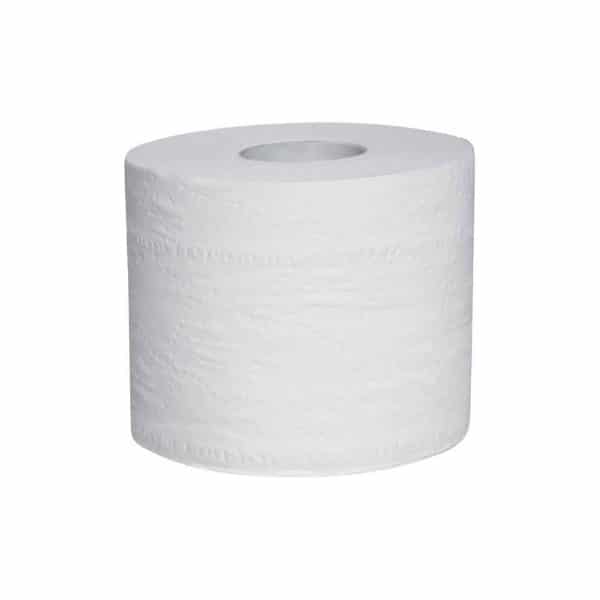
BUT WHY TOILET PAPER?
Let’s face it, toilet tissue is not something at the forefront of everyday thinking. Professor Bruns says the product is not important. Widespread fear, uncertainty, and helplessness is what people focus on.
Behavioural economist David Savage suggests toilet paper was the second round of coronavirus panic buying. The first was hand-sanitizer. He predicts there will be a third round of intense buying but did not know what it will be.
Meanwhile, Paul Marsden, a consumer psychologist at the University of the Arts, London says it is down to “retail therapy—we buy to manage our emotional state.”
Marsden says, “It’s about taking back control in a world where you feel out of control. More generally, panic buying can be understood as playing to our fundamental psychology needs.”
He goes on to explain we need autonomy, or a need for control. Rather ‘me shopping’ it is ‘we shopping’ which gives a relationship to others. It also gives the feeling that bulk buying of this product means we are “smart shoppers”—a feeling we are competent when other are not.
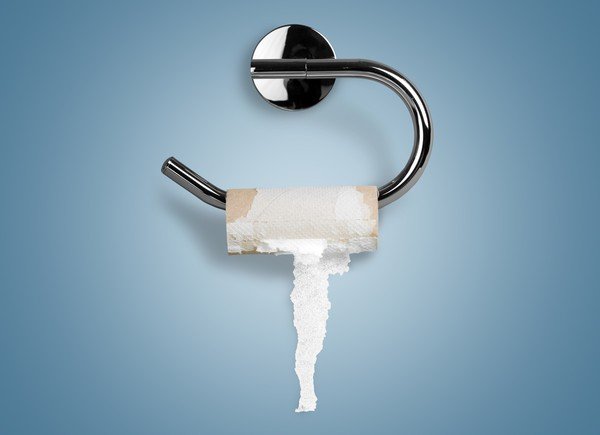
SHOULD WE REGRET NOT STOCKING UP?
The answer is yes, according to David Savage. “Regret is a really powerful motivator. It actually makes us feel way worse than just loss.
Savage goes on to explain exactly how that works, “Not only is it missing out on something, it’s missing out on something that we had the choice to fix.”
IS IT UNIQUE TO AUSTRALIA?
The toilet paper buying madness is spreading. Similar scenes of shoppers scrambling to hoard toilet tissue have been seen in Singapore, Hong Kong, and the United Kingdom.
No one knows what toll this pandemic will take and at what cost to the global economy. One way to momentarily escape the burden of uncertainty is delving into the pages of a good book. Check these quality releases in the link below.
https://books.bookfunnel.com/notorious-minds-readers-bundle-march/vl98rcszzo
 ajhenryblog