

In the quest to find if there is any truth in the statement, ‘what you think, you will become’ we explored many techniques from telling yourself to be rich, to fears and pessimism that hold people back from achieving their potential.

One source of information is Think And Grow Rich by Napoleon Hill. Hill has been described as a whack-job, con-artist with no credibility. It would be all too easy to dismiss Hill’s work, but science has since shown the champion of the ‘new thought movement’ might not have been that wide of the mark.

Hill wrote, “If I had the courage to see myself as I really am, I would find out what is wrong with me and correct it, then I might have a chance to profit by my mistakes and learn something from the experience of others, for I know there is something wrong with me, or I would not be where I would have been if I had spent more time analyzing my weaknesses and less time building alibis to cover them.”

For most of us, a soul-searching journey such as that is down a road few wish to venture. Science, however, has come some way to support the personal success author’s claim: humans can change their thought habits and in doing so, change neural pathways in the brain.
Eminent psychologist, Martin Seligman, Ph.D. wrote, “Another phenomenon—that of helplessness. Helplessness is the state of affairs in which nothing you choose to do affects what happens to you.” In other words, if you live week to week, and never seem to get ahead, that’s just how it is—you learned to be like that.
Hill echoes similar claims that extend from a helpless situation to a positive one. If you devote thoughts to becoming rich, your brain, the same brain Will Storr says creates a reality for us in which to live, will find a way to wealth.
David Schwartz in his book The Magic of Thinking Big outlines his principle: ‘believe you can succeed and you will’, saying the majority of people think they are failures and have not lived successfully. He goes on to argue fear is a determining factor in whether a person succeeds or not.
To test whether fear, or a steadfast belief in thinking yourself rich, is true, or just spiel to sell a few books, we’ll try a thought experiment.

The year is 2010. Many social media platforms are coming to the forefront, Twitter, Tumblr, Yahoo, Quora, MySpace, Bebo, Snapchat, and among them, Facebook. Amazon survived the tech crash, but stockholders complain the company was not reaching profitability fast enough. Apple releases the Mac Mini, the iMac, and the iPod Touch.
You have scrimped over the last few years to save $1,000.
Australia in 2010, had Bank standard variable interest rates were around 7.80% (more-or-less the same as a balanced investment option). You have a choice: leave your money in the bank and earn $78 each year, or go with uncertainty.
Before you plug earbuds (Bluetooth headphones had yet to come out) into the iPod Touch, remember that just eight years before the tech-heavy Nasdaq fell, 76.81% and many of those shares went bust—novice investors lost their money.
The cautious and fearful part of you would leave the money in the bank because it is better to earn a steady rate of interest than the prospect of losing it all.

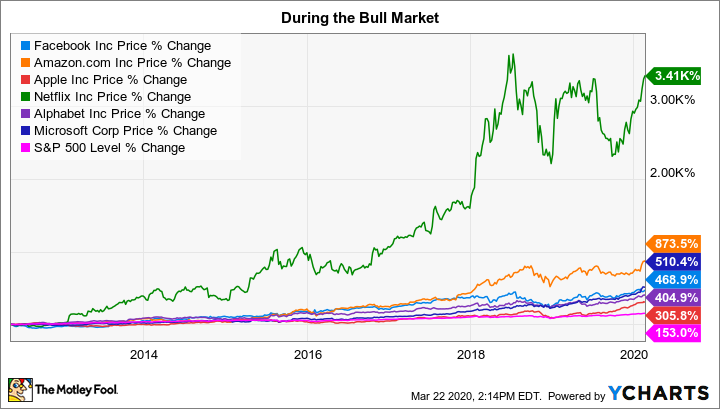
The optimist side of you who thinks you will be rich invests the savings into FAANG stocks (Facebook, Apple, Amazon, Netflix, and Alphabet—Google) The same one-thousand dollars would see, over the ten years, an increase of 1,400%, or $65, 396.42 profit. Whereas the bank savings account would realize interest rates dropping to under 2%.
Had we known technology stocks would increase at such a stellar rate, the choice would have been a no-brainer. Hindsight makes heroes of us all. Experienced investors will tell you, we can’t see around corners.
If that is the case, then fear and pessimism versus self-belief and courage are the mindsets separating the successful from the would-be-if-they-could-be.
 ajhenryblog