Net Zero. The Holy Grail. And Reality

The Opposition Leader Peter Dutton claims there is “no hope” of reaching net zero emissions without nuclear power. If his plan goes ahead, such a proposal is one the nation may come to regret.

A Nuclear power plant

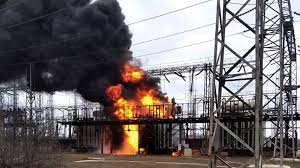
Russia’s war in the Ukraine revealed to the world how easily an aggressor can disable a country by targeting infrastructure. Generating power from a single source such as coal fired, or nuclear power stations would be first on the hit list. 

Imagine life without electricity?

Ukraine electrical station bombed

While Australia is currently not under threat from foreign entities, no one knows the future. 

Solar panels on household roof tops have reached 4 million or one in three houses in Australia. With so much low-cost power generated during daylight, both the energy and financial sector have declared coal fired power generation is not commercially viable.

Schools, shopping centres, and small businesses realise the cost advantages of installing photo-voltaic cells.

Rooftop Solar Panels

Currently, home battery systems do not offer good financial return (solar choice). Sodium-ion batteries are being developed. Sodium is abundant and at a fraction of the cost to lithium. 

Solar battery

Electric vehicles are another potential source for storage. The expected life of a car battery is some ten years. Such batteries, while not powering a car, still hold ample capacity to run household appliances. The industry expects used EV batteries given an extended life as low-cost rooftop solar storage. 

A nation with electrical power supply independent of a grid network would be that bit more secure from drone or rocket attacks. 

A military drone

Kane Thornton, chief executive of the Clean Energy Council points out “you can’t switch off a reactor when it’s not needed.”

The argument is, and has always been, a nation cannot rely on electrical power dependent on environmental conditions.


Arguments such as that are being addressed by engineers and innovations promoted regularly. 

Nuclear power stations are expensive. Consumers will ultimately pay for them. Switching off consumer’s rooftop solar when it is abundant and free, to buy more expensive nuclear generated power is absurd and an insult to the electorate’s intelligence. 

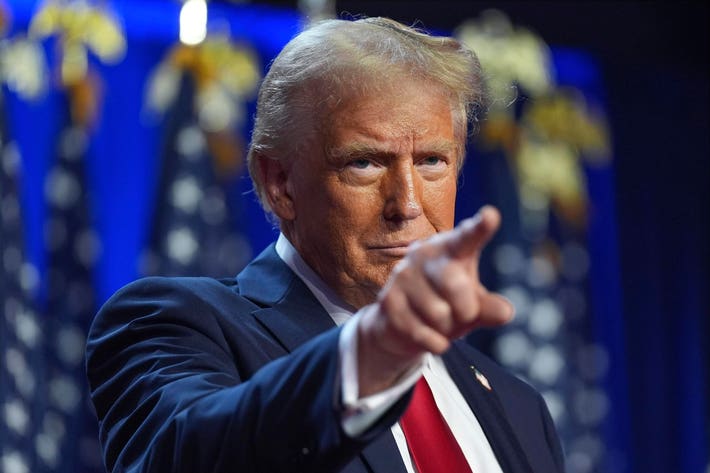
Is President-elect Trump a grifter or a genius?

I’ll admit at the outset to not being a fan of Donald Trump. His latest declaration to impose a further ten per cent tariff on imports from China could either derail global economy or a master stroke.

Trump justifies his move on a detail catching both the Wall Street and economists by surprise.

And it is based on the uncanny way history has of repeating.

The first Opium war between China and Britain started in 1839. It ended in 1842 with the Treaty of Nanking. But the Brits weren’t happy, they took the island of Hong Kong and part of the mainland Kowloon for good measure. 

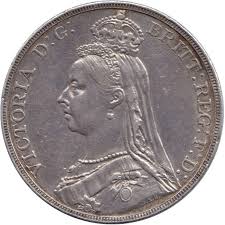
Part of the problem was China wanted to be paid in silver for trade in tea and silk. British Coins of that time were made from silver. Britain was losing its precious metal. To solve the imbalance of trade, English merchants traded opium sourced from Britain’s colonies in India. 

Opium addiction spread throughout the Chinese population creating massive social problems. Despite a ban in 1796, the British smuggled some 1,000 tons of opium per year.

Over the past ten years, a crisis has engulfed the United States. Fentanyl has become the primary cause of opioid-related overdose death in North America. Song writer and outstanding musician Prince died from a fentanyl overdose.

Fentanyl and other synthetic opioids are trafficked into the US by Mexican cartels and Donald Trump wants it stopped. 

Chinese companies are the major global supplier for methamphetamines, ketamine, tramadol, and xylazines. That market dominance results from the promotion and protection of illicit pharmaceutical industries by the Chinese Communist Party. The President-elect regards import taxes as a way of pushing China into ending production.

With street names such as China Girl, Murder 8, and Dance Fever, the problem is not only with the US. The EU’s retail heroin market is estimated to be worth €5.2 billion annually. The quantity of heroin seized by EU member states more than doubled in 2021 to 9.5 tonnes, the highest amount in 20 years. 

Nick Hubble, editor, Strategic Intelligence Australia, wrote: “Nobody in the West is aware of the historical echoes. But the Chinese are. And Trump is either sticking his foot in it or coming up with a stroke of tactical genius by exposing this.”

It appears the tables have turned, at least in a historical sense. The West is on the verge of Opioid revenge.

Donald Trump’s gambit could see a change for the good.

Fair Suck of the Sauce Bottle

Colloquial Australian slang such as ‘fair crack of the whip’, ‘fair suck of the sauce bottle’ (usually beer), and ‘fair suck of the sav’ (a battered sausage like a corn dog) means a fair chance, or a reasonable opportunity for all. 

In 2024, the Scanlon Foundation Research Institute conducted research on social cohesion. In other words, do Australians still believe in a fair go for everyone?

45 years-ago, then Prime Minister Gough Whitlam outlined a definition of social cohesion in his ‘It’s Time’ speech. “We can double and treble social benefits, but we can never make up through cash payments for what we take away in mental and physical well-being and social cohesion through the breakdown of community life and social identity.”

In December 2005 about 270,000 text messages circulated urging ‘Aussies’ to take revenge. Messages such as “This Sunday every… Aussie in the shire get down to North Cronulla to help support Leb and wog bashing day…” 

One of the most influential broadcasters of that time, Alan Jones ridiculed Lebanese Muslims during on-air comments describing them as “vermin” who rape and pillage a nation that’s taken them in”. A later court ruling declared the shock jock incited hatred and ordered to apologise. 

The incident possibly marked the beginning of the end of a fair go for all.

Researchers found a mixed response among those who agreed to take part in the survey. 85% think immigrants are good for Australia’s economy and multiculturalism benefiting everyone. However, in 2024, 49% of people say the number of immigrants recently arriving in this country is too high.

The cost-of-living pressures were a major concern for many. Australians experiencing financial hardship lose faith and trust in government, have a weaker sense of national pride, and harbour low opinions of migrants.

For example, one-in-three people trust their state government along with the Federal politicians. One-in-four don’t trust the media, and as for social media companies, fewer than one-in-ten think they can be trusted. 

The entire world had a difficult 2024. Violence in the Middle East sparked huge protested in Australia’s capital cities. The threat of China’s dominance over smaller Pacific nations is also a concern for many.

Researchers at the Scanlon Institute found that while social cohesion in Australia is under pressure, the society remains resilient. 

The Grinch of Wall Street

After Donald Trump declared victory as the next president of the United States, the Dow Industrials, S&P 500, and Nasdaq Composite went wild. So, why was one investor the Grinch of Wall Street?

Wall Street ended at record levels. Investors pinned their hopes and expectations on a Trump administration lowering taxes, deregulation, and a president who like the US dollar and the share market to do well. Trump said we should prepare for a ‘golden age’ of investing.

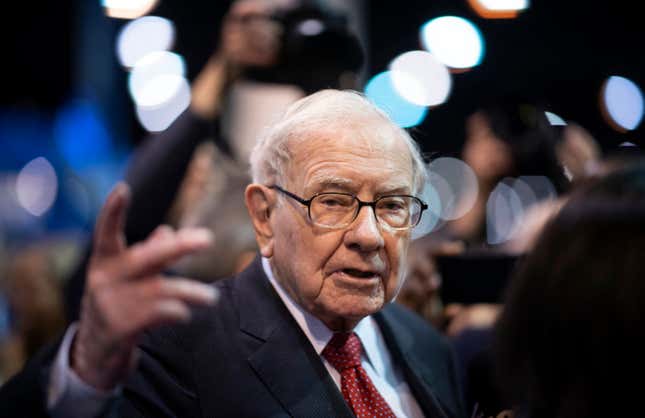
The Grinch of Wall Street was none other than Warren Buffett with a personal net worth of $147 billion. Anyone would expect he’d be among the party splashing cash. But the Oracle of Omaha has been doing the opposite. 

In June this year, Berkshire Hathaway sold 389 million shares in Apple. In fact, the company holds 400 per cent more greenbacks than it did 10 years ago.

Buffett routinely scoffs at any investor who tries to ‘time the market’. In other words, a person who sits on cash waiting for a global slump only to jump in hoping for a recovery. His latest actions appear to contradict his own advice. Is it a sign the 94-year-old is losing the plot?

Buffett is the most successful investor of all time. He has a few barometers and a mighty fine crystal ball—I doubt he has a crystal ball, but it would be a fun way to spice up the dry world of investing.

 Known as the ‘Buffett Indicator’, it divides the value of US stocks by the US gross domestic product or (GDP). If the value of shares outpaces the economy, then it could be a sign everything is out of whack, called a bubble in share market babble.

The indicator flashes when markets go past 100 per cent.

As Mark Twain once said, history doesn’t always repeat but it often rhymes. Ominous indicators popped up before the Dot.Com bubble, the Global Financial Crisis, and the Covid crash. 

So, where does the Buffett Indicator sit now? The value of shares is 208 per cent higher than the GDP.

The tricky thing about the future is, well, it’s plain old tricky.

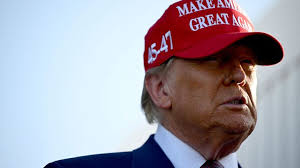
Wall Street could continue to climb breaking all records and Donald Trump makes America Great Again. 

Or else the Grinch of Wall Street has the last laugh.

Donald Trump and the Atlantic Meridional Overturning Circulation

It would be fair to say ex-president Donald Trump has never heard of AMOC, the Atlantic Meridional Overturning Circulation. But then, this is a guy who arrived in Florida after the destruction from hurricane Irma and told the crowd how sorry he was that Melania couldn’t be there with him to witness the destruction. Melania was standing right beside Donald. 

Donald Trump with Melania Tump

Recent polling suggests Donald Trump could be returned to the Presidential Office and the failure of AMOC his one notable legacy. 

As Michael Mann, distinguished professor of meteorology at Pennsylvania State University, said, “a second Trump term is game over for the climate”.

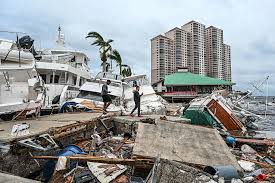
Damage from a Hurricane

Donald Trump called climate change, “One of the greatest scams in history.” On accepting the party’s nomination at the Republican National Convention, he said (on drilling) “We will do it at levels nobody’s ever seen before.”

Tump has said of the first day in office as president he would execute an executive order prohibiting offshore wind projects, saying they kill whales (In the UK, home to the world’s four largest wind farms, no humpback whale stranding have been linked to wind farms.) Source: Marco Silva & Jake Horton, BBC

Climate change is sometimes likened to a frog in water. If a frog was dropped into boiling water, it would jump out immediately. On the other hand, if the frog was placed in cold water, and the stove turned up, it would not notice that it was slowly being boiled alive.

A scene from the movie The Day After Tomorrow

The Atlantic Meridional Overturning Circulation carries warm, salty surface water from the tropics northward, where it cools and sinks near Greenland. The water at deeper levels flows back to the equator. It is one of the largest ocean current systems on the planet influencing weather patterns. 

AMOC is now weaker than at any time since the last Ice Age, some 11,500 years ago. In a 2021 analysis, the authors declared AMOC is at a point of “almost complete loss of stability.”

The US is one of the world’s largest oil and gas producers. There is both onshore and offshore drilling along with hydraulic fracturing (Fracking). 

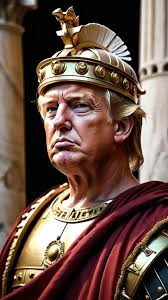
Donald Trump dressed as an Emperor

Just a month out from the election Donald Trump told delegates, “We will drill, baby, drill.” Meanwhile, water flowing northward from the equator is slowing and if the flow ended, Europe could be plunged into winters akin to Hollywood disaster movies. One such scenario cold see Donald starring as the Emperor who played golf while the world burned. 

There are no good youths, only bad ones.

Although this headline grabs attention, it is not true. What is true is the perception of Queenslanders going to the polls this weekend: youth crime is out of control.

Both major parties, the Liberal National Party and Labor have made getting tough on youth crime and issue to attract votes. 

Slogans such as “Adult crime; adult time” as used by the LNP create a sense of strength and leadership. The Child Protection Act 1999 in Queensland decrees individuals under the age of eighteen as children. These ill-begotten youths will get the same punishment as hardened criminals. 

Polls predict the Liberal National Party will romp home to an unprecedented victory. 

Almost nightly, television news broadcasts lead with stories of children driving stolen vehicles. Such headlines have voters riled. The real facts are rarely if ever mentioned by both the media and politicians. 

Renee Zahnow, criminologist with the University of Queensland said, “There’s no data to suggest that the rates of youth crime are spiralling out of control in Queensland or indeed anywhere in Australia.”

Australian Bureau of Statistics data showed that Queensland’s youth crime rate had halved across the past 14 years. A statistic seemingly overlooked by both sides of the

house.

Political parties in Queensland win or lose on a click-bait culture and sensationalist journalism.

At election time, as in war, truth is the first casualty. 

The Population Twist

How old do you think the average world’s population to be? The answer might surprise.

In the fabulous fifties the global population was some 2.5 billion people running around this blue planet. In 2021 the population exploded more than three time to 8 billion. Wow, that is a big bountiful bunch of babies.

But there’s a problem. Child mortality rates are concerning.

So, what drove the population? In 2018 for the first time in human history oldies took over. There were more folks over the age of sixty-four than there were under the age of five. And projections suggest by the end of this century there will be fewer babies born than today.

And it seems money makes the ageing go round. For example, Nigeria has a younger age group than Japan. The lower a country’s income, the lower the age group. People in North America, Europe, and East Asia including Australia look forward to a ripe old age, longer than poorer nations.

What does it mean for the future? You would expect countries with a younger, more productive population, to have an advantage in economic growth. There are a few road blocks to this. India has a youthful workforce but unemployment, education, and health problems stop the nation from achieving accelerated economic growth.

Source: Hannah Ritchie and Max Roser

Can We Live Better and Longer?

Book review:

Lifespan: Why We Age, and Why We Don’t Have To

by David A. Sinclair Ph.D.

David Sinclair Ph.D. AO is a Professor of Genetics at Harvard Medical School. He is an innovator and recognised by TIME magazine as ‘one of the 100 most influential people in the world.’

In a chapter called the Blind Epidemic, Sinclair talks about the growing worldwide problem of diabetes. During WWI, French biophysicist Pierre Lecomte du Noüy noticed a difference in the healing rate of wounds between young and old soldiers. A child will heal from a foot injury with little more than a Band-Aid. For an elderly person, a foot injury can be dangerous. And for diabetics, the story is much worse.

“The five-year mortality rate for a foot ulcer in a diabetic is greater than 50 per cent. That’s higher than the death rate for many cancers.”

Sinclair argues that instead of putting diabetes as among the deadliest diseases afflicting humanity, medical science labels it a “loss of resilience.” They accept it as part of getting old and dying.

David Sinclair. Ph.D. is a scientist at the Harvard School of Medicine. This is what he says about aging: “Once you recognize that there are universal regulators of aging… with a molecule such as NMN or few hours of vigorous exercise, or a few less meal: Aging is going to be remarkably easy to tackle. Easier than cancer.” But what does it all mean to the layperson?

Sinclair uses acronyms such as NMN as though everyone will understand. NMN stands for nicotinamide mononucleotide, a molecule naturally occurring in all life forms. At the molecular level, it is a ribonucleotide, which is a basic structural unit of the nucleic acid RNA (perhaps NMN is so commonly known, its inclusion into the glossary was unnecessary).

Sinclair’s claim sounds attractive, but it is hard to ignore initial scepticism. If vigorous exercise meant aging is easier to beat than cancer, then taking the notion to a logical conclusion, one would assume sports people to live longer. International cricketer Shane Warne retired in 2007. In 2022, he died from a suspected heart attack at fifty-two.

That said, much of Sinclair’s research is interesting, if not complicated, stuff. The hallmarks of aging are the accumulation of senescent cells. Basically, cellular senescence is when cells stop dividing. On top of that, these cells release inflammatory molecules. Even though these cells are thought of as “zombie” cells, act much like the walking dead; still alive and wreaking mayhem on their neighbours.

It is thought zombie cells are created by telomeres. At the end of our chromosomes are these distinctive little structures that comprise the same sequence and are repeated over and over about 3,000 times and reach up to 15,000 base pairs in length. When a telomere becomes short, it is like a hole in a bag of popcorn. Just as the hole exposes popcorn, chromosomes become exposed and many bad things happen.

These zombie cells release tiny proteins called cytokines. Cytokines cause inflammation. Our bodies fight back with specialised cells that detect and destroy bacteria and other harmful organisms. These macrophages also release antigens to T cells. The zombie apocalypse begins, resulting in unhealthy inflammation. Excess cytokine proteins are the driving force behind heart disease, diabetes, and dementia, as well as multiple sclerosis and psoriasis.

As dire as senescent cells appear, medical research is experimenting with drugs called senolytics to kill them off, and everyone lives happily ever after.

The news also gets better for Australians who are not just living longer, but better than their forebears.

“In 2018, Australia ranked seventh on the global Human Capital index, just behind Singapore, Korea, Japan, Hong Kong, Finland, and Ireland.”

In stark contrast, the news is not so good for Sinclair’s home country, The United States of America.

“Thanks to the burgeoning addiction to calories and opioids, and a health care system that is inadequate, if not completely inaccessible to one-third of its population, the United States recently experienced a decline in life expectancy for the first time since the early 1960s.”

Sinclair doesn’t recommend supplements. He takes 1,000mg of NMN each morning to raise nicotinamide adenine nucleotides or NAD. NAD is a chemical used for over five-hundred chemical reactions. It is also vital for sirtuins, an enzyme that controls longevity and is found in organisms from yeast to humans. Some people take nicotinamide riboside, NR, because it is cheaper. Others take Niacin-vitamin B3, and nicotinamide—a form of vitamin B3 found in food and supplements mostly used to treat pellagra (niacin deficiency), however, these do not raise the NAD levels as much.

Sinclair also takes resveratrol and metformin (a drug used to treat type 2 diabetes), along with vitamin D, K, and a small dose of aspirin.

The good news is you don’t always have to take drugs to increase NAD levels. Sinclair believes eating fewer meals helps to promote longevity. The benefits of short-term fasting have been around for some time. Celebrity doctors such as Michael Mosley believe fewer calories improve blood pressure, help the brain, and benefit blood sugar control.

Not only does putting your body under stress by dieting, but exercise also increases NAD levels.

Sinclair also avoids smoking, excessive exposure to UV, and eats a mostly plant-based diet. He also partakes in thermal shocks, such as diving into ice-cold water after a sauna. Sleep doctors, or somnologists, have long warned about overheating bodies in bed. Sinclair tries to “stay on the cool side both during the day and at night.”

Lifespan—Why We Age—and Why We Don’t Have To: David A. Sinclair PhD. with Matthew D. La Plante was published in 2019; an unfortunate release date, as it was right before COVID and Putin’s war.

During 2022, Australian deaths were 17% above the historical rate. Older people died from a contagious virus. It temporarily, one hopes, lowered the country’s life expectancy. The global pandemic was a ‘black swan’ event Sinclair referred to when Bill Gates warned of a global outbreak in 2014. If only Sinclair could have foreseen the impending global malaise. But then, no one knows the future, especially when it comes to dying.

David Sinclair’s next book will have an interesting twist, I should imagine, given the intervening events.

Australia cannot become a republic until the monarch finishes business.


            There have been sixty-one monarchs of England and Britain, some twelve hundred years of pomp and pageantry. And yet, all of it pales compared to Australia’s first people. A genetic study by the University of Copenhagen confirms Aboriginal Australians as having the oldest continuous culture on the planet.

            Australia’s ancient past took a decisive turn when Lieutenant James Cook sent two longboats ashore on the afternoon of the 29th of April 1770. A sign now cemented in that spot declares, “Welcome to Kurnell, the Birthplace of Modern Australia”.

            Cook had specific instructions: ‘with the consent of the Natives,’ take possession of territories. The Earl of Morton warned, ‘They are the natural, and in the strictest sense of the word, the legal possessors of the several regions they inhabit. No European Nation has a right to occupy any part of their country, or settle among them without their voluntary consent. Conquest over such people can give no justice.’

            Sydney Parkinson employed as an artist on the Endeavour noted in his journal that the local men yelled, “Warra warra wai.” He interpreted the words to mean, “go away”. In Dharawal culture, the words carry a more significant meaning. Those on shore on that day believed the ship was a low cloud, and the pale-faced northerners were ghosts.

            A mere four months later, Cook declared the east coast of this terra nullius an empty land and a British possession.

However, there was one glaring problem with that proclamation: to borrow the words from Solid Rock by Goanna, ‘someone lied’.

            Elder (the late) Aunty Beryl Timbery Beller said of that day, “… they were so ignorant they thought there was only one race on the earth and that was the white race. So, when Captain Cook first came, when Lieutenant James Cook first set foot on Wangal land over at Kundul, which is now called Kurnell, he said, oh, let’s put a flag up somewhere because these people are illiterate; they’ve got no fences.”

            In 1992, the High Court in the Mabo vs Queensland (No. 2) ruled the lands of the continent were not terra nullius at the time of settlement.

            This sentiment that indigenous knowledge and culture were inferior to the British was clear in a speech by NSW Premier Robert Askin. On the bicentenary of Cook’s landing, the premier said, “The Aborigines made some resistance and suffered from their contact with our culture. We are now trying to restore what they inevitably lost from moving out of the Stone Age and into the machine age.”

            Southerland Shire acknowledged the term ‘Birthplace of the Nation’ offended Aboriginal Australians. In 2000, the council changed to a new title, “Meeting of Two Cultures”.

            Since then, there has been a growing recognition among Australians that the sovereignty of the Indigenous country was never ceded to the British and the scars of colonial occupation are still raw today.

            Prime Minister Anthony Albanese said, “This nation didn’t begin in 1788. It goes back some 65,000 years at least. It should be a source of great national pride. We live and share this continent with the oldest continuous civilization and culture on Earth.”

            Upon the death of Queen Elizabeth II, Sovereign of fourteen realms (of which Australia is one) for seventy, of the two-hundred and thirty-four years of colonial history, there is a call for change.

            Greens Senator Marheen Faruqi Tweeted on the news of the Queen’s death, “… could not mourn the leader of a racist empire built on the stolen lives, land, and wealth of colonised peoples.”

The abuse of first Australians by governors Phillip, Macquarie, and Brisbane is well documented. Since 1993, a growing awareness throughout the Australian population of Indigenous land rights has created a re-think of reconciliation for the traditional land owners.

Whether James Cook is or isn’t to blame is argued among historians. Should Cook have documented the new land, as did Dutch navigator Willem Janszoon in 1606, or Dirk Hartog in 1616, and sailed on? If Europeans stayed away from settling the continent until the mid-eighteen hundred when Pacini, Pasteur, and Koch discovered ‘the germ theory of diseases’, thousands of indigenous people may have survived—but the past is set and not stuff for speculation.

Worimi man John Maynard, professor of history at Newcastle University, wrote, “Whether he deserves this monster mantle is open to conjecture and challenge from wide non-indigenous Australia, but from an Aboriginal perspective, Cook remains the scapegoat for white invasion.”

            If Australia was to become a republic, would it change in any significant way the character and nature of the land and its people? There can be no denying a dark part, just as there can be no denying a heroic background throughout the minuscule European epoch. In 1930, the Scullin government drew a line in the sand for independence from the monarchy when it defied the wishes of King George V by appointing Australian-born Sir Isaac Isaacs as the governor-general.

            There are many in Australia who want to change the system of government from a constitutional parliamentary monarchy to a republic. A president would replace King Charles III. Many would argue that Australian Prime Ministers of recent years are already presidential.

            This urgency for change to a republic is to insure “our future more than ever will be in Australian hands.” Such an argument assumes Australia is not an independent nation when clearly it is. Sentiment and an acknowledgment of our short European settlement link us to the British Crown. If the nation was to no longer recognise such, would it be for the better?

            The King appoints the Governor-General on the advice of the prime minister of the day. He or she is the Sovereign’s representative and is effectively head of the state of Australia while holding that office. Once appointed, the King steps back from the day-to-day running of the business, leaving it to the Governor-General. While the Governor-General does have executive power, these powers are exercised only on the advice of the prime minister and ministers charged with governing the country.

            In 1933, William Cooper, an elder of the Yorta Yorta people, drew up a petition to King George V. It said Aboriginal people should have a say in the laws affecting them in the Commonwealth Parliament. Cooper’s grandson passed the same petition onto Queen Elizabeth II.

Indigenous senator Pat Dobson said in an ABC documentary, “We really can’t sever our ties with Britain until there’s some restitution, some acknowledgment of how we’ve become dispossessed.”

A treaty as defined by dfat.gov.au is an international agreement between (States or organisations) and is governed by international law giving rise to legal rights and obligations. Before Australia can become a republic, the Executive power of the monarch of Australia should declare a treaty with indigenous people and have their voice recognised in parliament.

Australia would then be truly independent, not only in the day-to-day business but also in spirit.
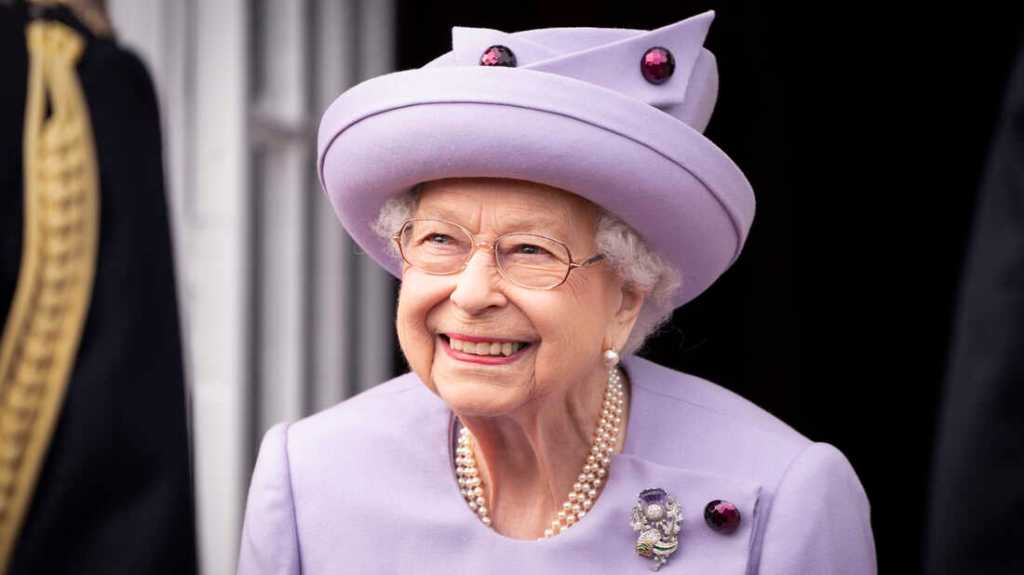
EDINBURGH, SCOTLAND – JUNE 28: Queen Elizabeth II attends an Armed Forces Act of Loyalty Parade at the Palace of Holyroodhouse on June 28, 2022 in Edinburgh, United Kingdom. Members of the Royal Family are spending a Royal Week in Scotland, carrying out a number of engagements between Monday June 27 and Friday July 01, 2022. (Photo by Jane Barlow – WPA Pool/Getty Images)

In a time of Twitter wars and nastiness accepted for celebrity, Queen Elizabeth II stood above it all with uncommon dignity.