Back in 2014 I completed a course at Monash University on Mindfulness. At the time, I had no real interest in the subject other than idle curiosity. I, like many people, had a preconceived notion that being mindful was sitting on the side of a hill with a Tibetan Singing Bowl and chanting, “Oh mani-ard-me ohm,”
Meditation is an essential part of mindfulness, but the act of being mindful is much more: a ritual of awareness practised every day until it becomes a new way of thinking.
The course inspired me to investigate other aspects of thinking, courses as diverse as Forensic Pathology, to brain chemistry.
Never mention transmitter molecules binding to a receptor on the post-synaptic cell’s dendrite in a pub. The response is mostly what you expect: stifled yawns, wrist-watch glances, and, “Isn’t it about time you shouted a round?”
Needless to say, brain chemistry is a subject I keep to myself.
It led me to wonder if we can change our attitudes, or even the way we think? It seems the more neurologists learn about brain pharmacology and the nervous system through computerized axial tomography or CT scanning, and magnetic resonance imaging, MRI scans, empirical evidence suggests we can.
The everyday term is neuroplasticity.
But what is it, and quite frankly, why should we care?
In the quest to find if there is any truth in the statement, ‘what you think, you will become’ we explored many techniques from telling yourself to be rich, to fears and pessimism that hold people back from achieving their potential.
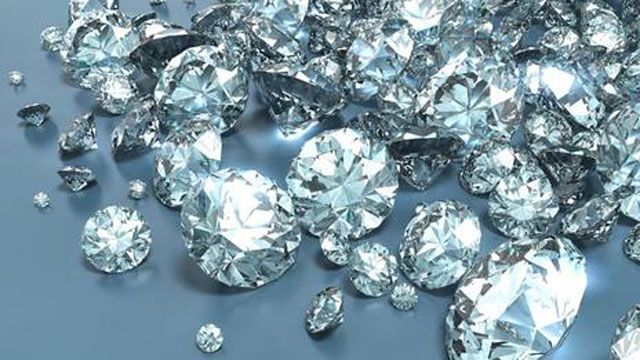
Scattered diamonds
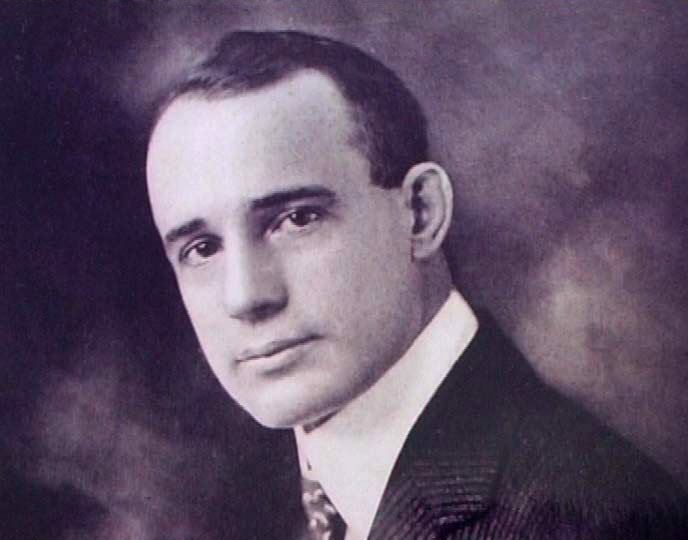
One source of information is Think And Grow Rich by Napoleon Hill. Hill has been described as a whack-job, con-artist with no credibility. It would be all too easy to dismiss Hill’s work, but science has since shown the champion of the ‘new thought movement’ might not have been that wide of the mark.
Hill wrote, “If I had the courage to see myself as I really am, I would find out what is wrong with me and correct it, then I might have a chance to profit by my mistakes and learn something from the experience of others, for I know there is something wrong with me, or I would not be where I would have been if I had spent more time analyzing my weaknesses and less time building alibis to cover them.”
For most of us, a soul-searching journey such as that is down a road few wish to venture. Science, however, has come some way to support the personal success author’s claim: humans can change their thought habits and in doing so, change neural pathways in the brain.
Eminent psychologist, Martin Seligman, Ph.D. wrote, “Another phenomenon—that of helplessness. Helplessness is the state of affairs in which nothing you choose to do affects what happens to you.” In other words, if you live week to week, and never seem to get ahead, that’s just how it is—you learned to be like that.
Hill echoes similar claims that extend from a helpless situation to a positive one. If you devote thoughts to becoming rich, your brain, the same brain Will Storr says creates a reality for us in which to live, will find a way to wealth.
David Schwartz in his book The Magic of Thinking Big outlines his principle: ‘believe you can succeed and you will’, saying the majority of people think they are failures and have not lived successfully. He goes on to argue fear is a determining factor in whether a person succeeds or not.
To test whether fear, or a steadfast belief in thinking yourself rich, is true, or just spiel to sell a few books, we’ll try a thought experiment.
The year is 2010. Many social media platforms are coming to the forefront, Twitter, Tumblr, Yahoo, Quora, MySpace, Bebo, Snapchat, and among them, Facebook. Amazon survived the tech crash, but stockholders complain the company was not reaching profitability fast enough. Apple releases the Mac Mini, the iMac, and the iPod Touch.
You have scrimped over the last few years to save $1,000.
Australia in 2010, had Bank standard variable interest rates were around 7.80% (more-or-less the same as a balanced investment option). You have a choice: leave your money in the bank and earn $78 each year, or go with uncertainty.
Before you plug earbuds (Bluetooth headphones had yet to come out) into the iPod Touch, remember that just eight years before the tech-heavy Nasdaq fell, 76.81% and many of those shares went bust—novice investors lost their money.
The cautious and fearful part of you would leave the money in the bank because it is better to earn a steady rate of interest than the prospect of losing it all.
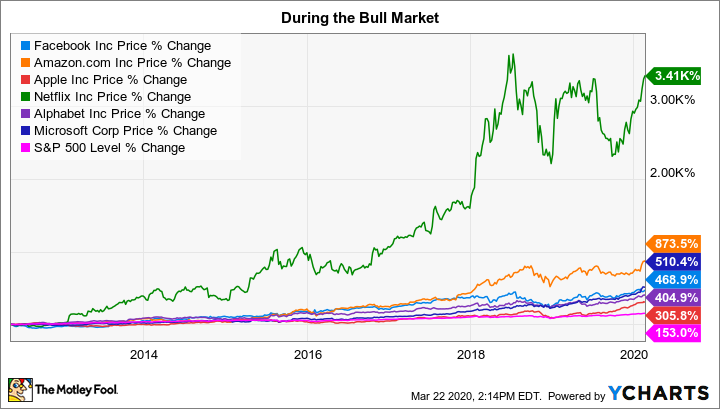
The optimist side of you who thinks you will be rich invests the savings into FAANG stocks (Facebook, Apple, Amazon, Netflix, and Alphabet—Google) The same one-thousand dollars would see, over the ten years, an increase of 1,400%, or $65, 396.42 profit. Whereas the bank savings account would realize interest rates dropping to under 2%.
Had we known technology stocks would increase at such a stellar rate, the choice would have been a no-brainer. Hindsight makes heroes of us all. Experienced investors will tell you, we can’t see around corners.
If that is the case, then fear and pessimism versus self-belief and courage are the mindsets separating the successful from the would-be-if-they-could-be.
Award-winning writer, Will Storr looks at the question of reality, and how our brains show it to us. Storr claims, “In order to tell the story of your life, your brain needs to conjure up a world for you to live inside, with all its colours, and movements, and objects, and sounds. Just as characters in fiction exist a reality that’s been actively created, so do we.”
Whoa! Wait a minute? What was that? A big call for many of you reading this blog: reality and our existence in it is a story we make up? To test if there is any truth in this wild claim, we have to go back to the years 1868 through to 1892 in Great Britain. The Prime Minister William Ewart Gladstone noticed something bizarre in Homer’s Odyssey.
William Ewart Gladstone
The Ancient Greek poem about Odysseus, the king of Ithaca, and his journey home after the Trojan War is considered the oldest piece of literature still read today. Odysseus’ return takes some ten years encountering many dangers, one of which was angering Poseidon, the god of the sea. Gladstone noticed there was no mention of the colour ‘blue’ in the poem. Homer describes the ocean as ‘wine-dark’ but never blue.
A mosaic of the Sirens
A psychologist from Goldsmiths University of London, Professor Jules Davidoff discovered the Himba tribe in Namibia had no word for ‘blue’ in their language. He embarked on a series of tests to find out if they could see the colour. Davidoff created a circle of eleven green squares with one stark blue square and showed it to the Himba group. Those who took part struggled, and many made mistakes in identifying the blue square.
Squares shown to the Himba people
Further to this idea that reality is something we invent is the work of Ellen Langer, PhD. Langer joined the faculty at Harvard University in Social and Clinical Psychology in 1977. Her ground-breaking study in 1979 called Counterclockwise was repeated by the BBC in 2010 in a series called The Young Ones. The idea was simple. Take six aging has-been celebrities and convince them they are young.
The septuagenarians spent time in a country house where everything was retrofitted to the year 1975 with nothing to suggest it was thirty-one years into the future. All results were astounding. As a whole, the group walked taller and even looked younger. One confined to a wheelchair, ditched it for a walking stick. Another, who couldn’t complete the simple task of pulling on their socks and shoes, was gliding around guests at a dinner party.
The Young Ones
How is it possible that people in their seventies could reverse the frailty of aging without drugs or radical gene-replacement therapy?
If we can believe Will Storr and Martin Seligman, it is because their brains told them they were no longer old, but young.
Storr goes some way to explain why our reality is not what it seems. “The hallucinated reconstruction of reality is sometimes referred to as the brain’s ‘model’ of the world. Our senses seem incredibly powerful: our eyes windows through which we observe… our ears open tubes into which noises of life freely tumble. But this is not the case. They actually deliver only limited and partial information to the brain.”
That part of the visible light spectrum humans can see. Birds see power lines as busting light and popping flashes because they see ultraviolet light.
In reality, colour does not exist in the universe and neither sound. Three different cones–L, M, and S–in our eyes (some six to seven million photoreceptor cells in the retinas of vertebrates) convert waves in the visible light spectrum into red, green, and blue. Changes in air pressure react with the tympanic membrane, known as the eardrum, sending signals to our brain. Our brain interprets those signals as either a crash or a bird’s twitter.
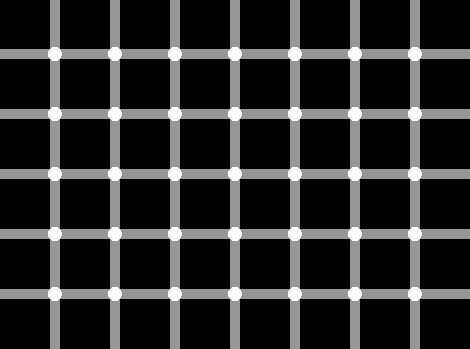
We know our eyes are fooled by optical illusions.
Are the dots white or black?
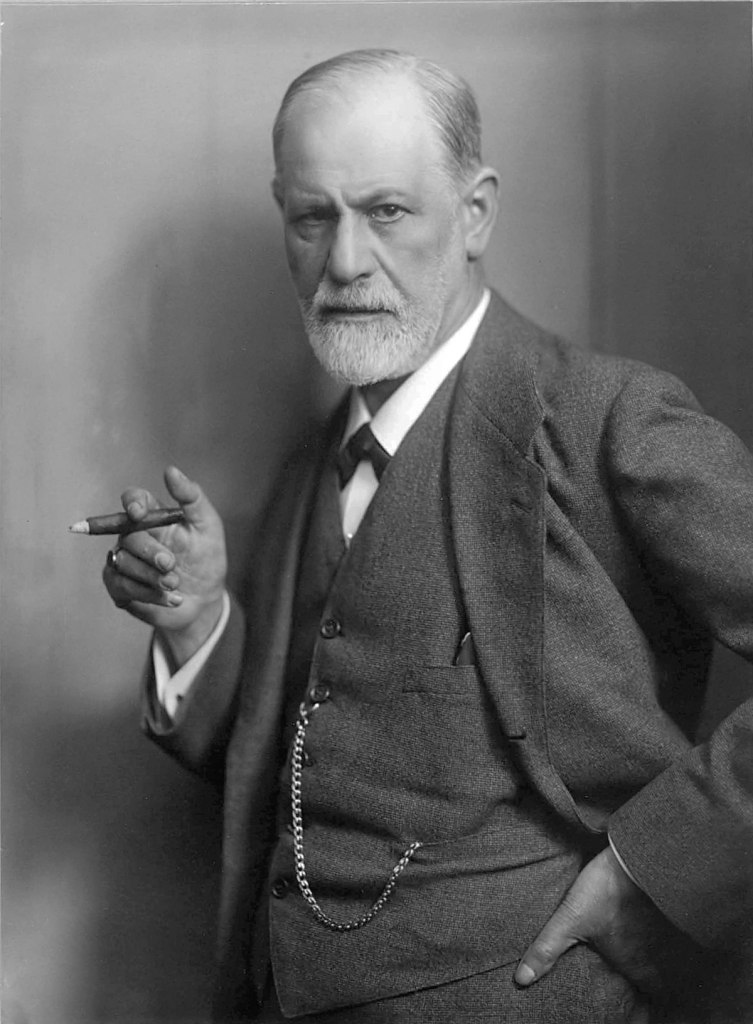
During the 1960s, psychologists questioned much of Freud’s approach to psychoanalysis. Freud proposed that mental suffering was some vile part of us. “Your most loathsome inner secrets are what is most basic to you.”
Sigmund Freud thought our pessimistic feelings of loathing were formed on our mother’s knee
Psychologist Aaron T. Beck, regarded as the father of cognitive therapy, sees things differently. Beck argues from an entirely opposite approach. He claims, “Depression is neither bad brain chemistry nor anger turned inward. It is a disorder of conscious thought.”
If the world is a place we create in our heads, then those early advocates of self-help might be on to something: what we tell ourselves is what we will become. Modern historians do not hold Napoleon Hill in good stead. Many doubt his claim to have met the advertising guru, Andrew Carnegie. The design, technology, and science website, Gizmodo, said of Hill, “the most famous conman you’ve probably never heard of.”
Hill said, “Anybody can wish for riches and most people do, but only a few know that a definite plan, plus a burning desire for wealth, are the only dependable means of accumulating wealth.” Is this an accurate statement, or is it a fact that people who devote their time to money (instead of playing sport or exploring continents) accrue more wealth?
The precious yellow metal
In the next installment, we look at experiments conducted by American psychologist Peter Seligman and author of several self-help books who proved we can teach ourselves many things, including learning to be helpless.
To further explore the idea that ‘what you think, you will become’ we must look at possibly the most successful of all self-improvement books, Think and Grow Rich by Napoleon Hill, published in 1937.
While much of the book is about ways to become wealthy, the author insists following 13 principles in the form of ‘Philosophy of Achievement’ will help anyone succeed in any field of endeavour.
Motivational author Napoleon Hill
In the book, Hill says, “There are no limitations to the mind except those we acknowledge. Both poverty and riches are the offspring of thought.”
The pathway to success, whether it is gaining wealth, or learning a foreign language, is simple—think you can do it and you will. The one question remains if it is that easy, why don’t we do it?
Some critics question the promise of positive attitudes declaring positive thinking is no more helpful than wishful thinking.
The self-help books such as Think and Grow Rich assume a large portion of the population want to be rich, or richer than they already are, and therefore equate wealth as a guarantee of success.
Australian Gambling Statistics somewhat bear that out. In 2017 Australians bet more than $242 billion, which is the equivalent of spending $12,000 per person over the age of eighteen. Gambling is defined as taking a risky action with the hope of success (winning a larger amount than the initial wager). Such numbers prove a large section of the community wants more and will punt on it.
Dollars falling from Heaven
But does believing you can win, make you win?
The definition of ‘success’ is far from tangible. A used-car salesperson’s meaning of success will differ to that of a Tibetan monk. Does supporting a family through the good times and bad, and raising happy children mean you are successful, and that is as good as it gets?
David Schwartz, PhD, believes fear stops people from achieving their goals.
“Destroy fear: Yes, fear is real, and we must recognise it exists before we can destroy it. Most fear is psychological—worry, tension, embarrassment, and panic all stem from a mismanaged, negative imagination.”
Gold bullion
Yes, good imagination, bad imagination. Imagining one million dollars is what keeps us buying lottery tickets even though the odds of winning are monstrously stacked against us.
Napoleon Hill was first to suggest fear holds people back. He created a list of ‘seventy-five famous alibis’ individuals use as an excuse for not achieving their desires. The excuses range from: if only I had good health; if only I didn’t have a wife and children; if only times were better; if only I had someone to help me; if I could just get started; if I could just get a lucky break, and so on.
Hill goes some way to explain the reasons people don’t adopt a positive mindset and think their way to success when he says, “Building alibis to explain away failure is a national pastime. The habit is as old as the human race and is fatal to success. Why do people cling to their pet alibis? The answer is obvious. They cling to their alibis because they created them. A man’s alibi is a child of his own imagination.”
In the next episode of The Squishy Stuff, we look at the award-winning author, Will Storr who thinks it doesn’t matter what self-talk we tell ourselves because our brains are lying.
In this series we look at the notion, “what you think, you will become”.
We explore the idea that by changing your thoughts, you can affect the world around you and the way others react to what you say and do. Think differently and become successful. The Squishy Stuff investigates this idea to find out if it is true, or just a big load of baloney.
The human brain
Scott Phillips, CEO of The Motley Fool Share Advisor, reflects on success, and what is needed to be successful. He wrote, “Each of these men (Buffett, Lynch, Fisher, Graham, Munger, Schloss, Pabrai, and Klarman), I feel confident in saying would agree with me that even the stated elements of their own investing styles were ‘necessary, but not sufficient.’ That it takes more than just a simple application of a predetermined framework to be successful. That you need to be able to understand the “squishy stuff”—the things that can and will change, or the things that you simply can’t quantify.”
Phillips questions why individuals such as Richard Branson, Jeff Bezos, and Bill Gates are successful, while others are not. He quotes film producer Samuel Goldwyn who once said, “The harder I work, the luckier I get”. But Phillips thinks hard work is not enough. Part of their success was because of luck, “We can’t know the many thousands of lucky breaks that lead to success (and failure). The people they met. The products they sold. The decisions their competitors made—for every Branson, there are ninety-nine small business people that went broke. For every Gerry Harvey, there’s a would-be electronics king running a single store in suburban Perth.”
Lucky number 7 is the world’s favourite number. There are seven days of the week, seven colours of the rainbow, seven notes in a musical scale, not to mention seven seas and seven continents. After creating the Earth, God rested on the seventh day.
The question remains, does luck exist, or do we make our own luck? Can you ‘think’ your way to becoming luckier than the next person?
David Schwartz, PhD, doesn’t believe luck has any part in an individual’s success. In his book published in 1959, The Magic Of Thinking Big, he outlines strategies to change the way we think, and therefore change our lives: think success, don’t think failure; remind yourself that you are better than you think you are; the size of your success is determined by the size of your belief.
Research has proven there are many benefits to positive thinking from cardiovascular health, lower levels of stress, and even increased life expectancy.
The idea that we can change the way we behave by altering our thoughts goes back to as early as five thousand BCE. Ancient Egypt, China, Judaism, Hinduism, and Buddhist cultures practised meditation. Buddhist have fundamental teaching based on the Four Noble Truths that declare life is suffering, and there is a possibility for a cessation of suffering through following the Noble Eight Fold Path. Karma, contrary to popular belief, means ‘action’. Good deeds give rise to a positive mentality which in turn affects the life and future of the doer.
The Lotus symbol
In the next episode we continue the journey through numerous claims that our thoughts, and even our brains, are changeable, and such alteration can bring about a better life.
The rapid spread of COVID-19 throughout the world’s population, and in particular the United States, has forced much of the population to cover their faces. Not seeing citizen’s faces in public places has law enforcement agencies scratching their heads.
Your Face Says a Lot About You
Most of us look at our faces in the mirror and think nothing of it. But little do we realise that when we venture outside, others are watching.
Recognition software gives cameras the ability to recognise faces from a myriad of objects around them, even in crowded airports. Points on our faces called nodes are converted to mathematical formula. These numbers are turned into a code called a faceprint. Anyone of us who tag friends on Facebook becomes part of Facebook’s database. The FBI in America has more than 641 million photos in their database.
Although facial recognition is successful in tracking criminals, it is not always accurate. Recognition software works best when we look directly at the camera. Poor lighting, or looking indirectly at the camera can cause errors. For example, Amazon’s facial technology pegged 27 criminals. The problem with that was the 27 individuals were well known professional athletes and were falsely identified. Wearing a mask could widen the margin of error.
In an intelligence memo from the Department of Homeland Security warned that the widespread uptake of people wearing masks to protect themselves from infection is damaging the system that could take years to fix, even after life has return to normal.
Any consideration for the loss of identity to facial recognition networks must be pitted against the damage Coronavirus inflicts in the community. Some people still refuse to wear masks even though masks are your best bet against airborne droplets carrying the virus.
Wearing a mask maybe uncomfortable in those moments you need to wear one, such as shopping for groceries, but a mask may also save your life.
Social media singles out people who throw embarrassing tantrums when questioned by authorities charged with protecting the community. The meme ‘Karens’ was originally attached to middle-class white women who regarded themselves as entitled—the anti-vaxxer mums, and the how dare you talk to me like that hair-dos.
In 2020, Karens have become somewhat social pariahs in society. Calling someone a Karen or Ken is taking a jab at their self-absorbed importance over the safety of others.
Although facial recognition technology may be compromised because of the large number of people who choose to wear masks for the safety of the community, social media steps in to take its place.
The Chinese government is dragging its feet over investigations into the origin of COVID-19. Populations around the world went into lock-down, alarmed by rising death tolls. Such a wide-spread catastrophe was in the pipeline for a decade or more awaiting a time when the mankind would submit to the promise of hope.
Corporations such as the Gates Foundation foresaw the need for control free will in the population. Deciding between a Ford or a Honda is not good for business–having no choice at all is.
The process began years before with the exploitation of the digital highway. In knowing most in developed countries would eagerly participate in this technology offered seemingly free, was a gamble, and one that paid off. First to be sacrificed was intellectual property. Music was downloaded without royalty payments to the composers and artists. Movies and books followed. China copied patented products to produce a cheaper version without compensation to the businesses researching and testing the appliance or product. All the while, Facebook and Google collected personal information stored in vast clouds.
The stage was set, the instrument in place. All that was left was the willing cooperation of citizens world-wide. And what better way than through fear of a contagious disease.
A biotech firm not widely known on the world stage has a vaccine It will pass government scrutiny and various trials before getting the green light. Billions of doses of the drug will be manufactured in a network of alliances of shared methodology. Included in batches of the serum are nano-particle receptors that attached to the human immune system and travel to the spleen. The spleen serves as a storage unit for platelets and white blood cells until the immune system calls on them. These receptors are stored in the spleen until world powers call them to action.
Individual decisions on what to do or buy will be determined by signals through the fifth- generation network, a global wireless standard with ultra-low latency (minimal delay in sending data). The 5G network will connect a massive number of embedded sensors in virtually everything. For this reason, the network is estimated to deliver $13.2 trillion worth of goods and services.
Although the above conspiracy sounds plausible, it is just that: a bogus yarn to deceive readers into thinking something big is about to happen. 5G is radio waves sending encoded data through a cellular network, not much different to existing networks we’ve lived with for decades.
Incredible as it may sound, a YouGov survey found 44 percent of Republican voters believe Bill Gates will put a microchip inside a coronavirus vaccine to track people’s movements.
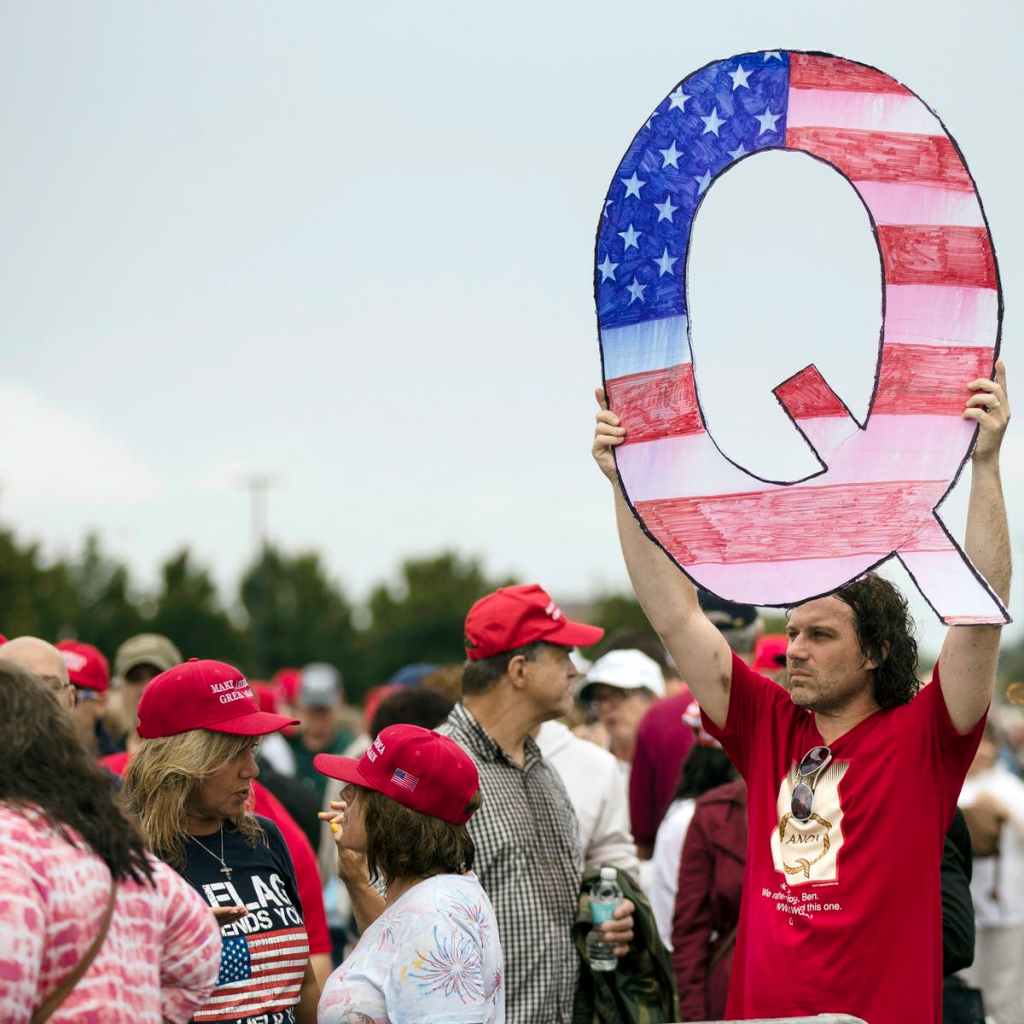
The church of QAnon believes an all-powerful “deep state” cabal of pedophiles invented coronavirus to take down Donald Trump.
Harland Dorrinson has a theory based on ‘conclusive evidence’ that president Trump is the ‘ultimate weapon’ to bring down the United States. Donald Trump was created by clandestine evil scientist and programmed to destroy the economy.
As of June 3rd 2020, death in the US from coronavirus totaled 100,197. More and more conservatives question the death toll and are convinced the figure is purposely inflated for political reasons. President Donald Trump called the models “wrong from day one” and “out of whack.” Fox News maintains the medical community and the media are fixing the numbers.
George Floyd died during an arrest in Minneapolis. His death ignited wide-spread protest not only in America but across the globe. People are fed up with the way things are. They want change. In times such as this, we see what humanity is really about. It is in our stories.
As author Lisa Cron says in her book Story Genius, “Which means why we’re there (in a story), to gain insight into human nature, our nature—so we can better navigate the world.”
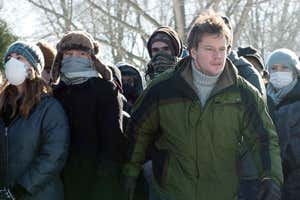
Hollywood star Matt Damon recalls a notice attached to the copy of a screenplay he received. Written by Scott Z. Burns, the note read, “Read this then go wash your hands.” That instruction to ‘wash your hands’ from ten years before the current crisis, foretold a plight that later grew into a crucial truth in 2020.
Burns’ manuscript was for a movie called Contagion, directed by Steven Soderbergh and released in 2011. The film contains many uncanny similarities to the COVID-19 pandemic inflicting suffering on a global scale almost a decade later. To put the script in perspective, Burns researched many pandemics before starting the script. The 2009 flu pandemic was “really helpful” he said. At the time, the scriptwriter examined issues not solely relating to the virus, but how society handled the situation. The 2020 pandemic is very much about society and the disruption caused by lock-downs and the imposition on individual freedom.
When the world was first alerted to a novel coronavirus in December 2019 after a fish vendor became ill in a market place in Wuhan, China, comparisons found in fiction spread via social media. A 1981 novel by Dean Koontz titled The Eyes of Darkness referred to a deadly virus named “Wuhan 400”. History reveals a long a varied tradition of telling stories about torment and carnage.
During the 8th century BC, the Greek gods did not take kindly to Agamemnon’s disrespect of Apollo. According to Homer’s epic poem the Iliad, the gods fired arrows tipped with disease to afflict the Greek army. When Chryseis, who was held captive by Agamemnon, is returned to her father, Apollo ends the scourge. Along similar lines of suffering The White Plague published in 1982, Frank Herbert writes of a scientist bent on revenge creating a pathogen that kills human females. By the time a vaccine is found, Earth’s genetic balances had shifted to leave a few women with thousands of suitors to choose from. Not to be outdone in dominating the genetics pool, The Female Man penned in 1975 by Joanna Russ wiped all the male species, leaving a feminine utopia. Fortunately for humanity, none of these stories eventuated, yet.
There are, however, a few novels whereby elements in the story are strikingly similar to what transpired throughout subsequent history. Buzz Windrip is a character in It Can’t Happen Here by Sinclair Lewis. Windrip defeats FDR in 1936. His campaigns rallied around America’s white working class, and he spearheaded the cause of the ‘Forgotten Men’. An article in the New York Times outlined similarities between Windrip and Donald Trump. Tom Clancy in his 1994 novel, Debt of Honor, tells of a hijacked 747 crashing into the Capitol Building. In his 1968 novel John Brunner foresaw things thought impossible back in the sixties: the decline in tobacco use, decriminalization of marijuana, global terrorism, and the advent of gay marriage.
Few would have imagined facial recognition and public areas under the scrutiny of cameras in 1949. Neither would they believe personal details would be collected by mega- corporations such as Google. When George Orwell wrote Nineteen Eighty-Four he imagined totalitarian governments using mass surveillance to control the population. This argument that humans can not invent or imagine something they have not seen is curious. Einstein imagined the theory of general relativity whereby a large object could bend time. It took some 100 hundred years for astronomers to discover the fabric of space-time to be ripped around much more than expected and proves Einstein correct. When it comes to creating something not seen before, Douglas Adams in his Dirk Gently’s Holistic Detective Agency credits the renowned inventor, Sir Isaac Newton, for inventing the cat flap. “A device of the utmost cunning, perspicuity, and invention. It is a door within a door, you see.”
The line, “Blogging is not writing, it’s graffiti with punctuation,” is from the film Contagion. It was said to online commentator Alan Krumwiede when he asked for information about the virus. No one took him seriously. If we took stories about time-travel or mankind inhabiting planets other than the Earth as proof the stuff of imagination can or will become reality, then books and blogs should be taken seriously.
The NSW Arts Minister Don Harwin resigned after breaking social isolation guidelines by traveling to his Central Coast home. His excuse was the low-density holiday home was better for his health.
Is the Arts Minister yet another politician telling the electorate one thing while doing the opposite? Or is there unspoken wisdom in his decision to flout the rules?
Here’s what Don Harwin had to say: “I live in a very built-up area in Sydney with high density and here I have windows that can open so I can have the fresh air and I can walk in fresh air and I have more room in my house here than I would have in my small apartment in inner Sydney,” he said.“I have two residences. I have chosen to live at this one for health reasons.”
Australia has a huge advantage in the fight against coronavirus. Having room to sprawl in our major and provincial cities makes social isolation that bit easier. Low density suburbia could be the turning factor in mitigating this life-threatening malaise, or pandemics in the future.
When you consider the changing landscape of Australia’s urban environment, the ‘Big Country’ is not so spacious. The much-valued backyard is disappearing.
Tim Lawless from Core Logic reports: Australia is moving through the peak of an unprecedented boom in apartment construction. Over the twelve months ending March 2018 there were almost 97,000 medium to high density dwellings that completed construction across Australia; a year earlier there were 105,300 projects that finished construction (84% higher than the decade average). As at March of this year there were still 155,275 medium to high density projects still under construction
COVID-19 could expose the consequences of over development. Who or what is driving the push to high-density living?
The NSW Department of Planning Industry and Environment said on their website: “The construction and development industry is vital in helping the State recover from this crisis. Our plan will cut red tape and fast-track assessment processes to boost the construction pipeline and fast-track new projects. This will create and support construction jobs and allow work to continue wherever possible in line with the best medical advice.”
Many have speculated in the media about changes in people’s mindset post COVID-19. Businesses have transformed the workplace from a single hub to functioning in remote locations. Crowded beaches and the café lifestyle in our over-burdened capital cities could be an unintended casualty, losing out to those wanting clean air, open space, and healthier living.
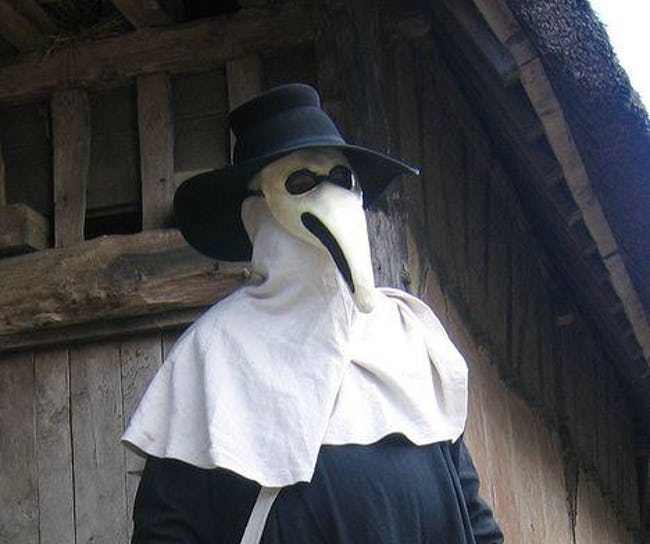
Back in 1564, the year William Shakespeare was born, a weaver’s apprentice died. It was in a quaint English village. There was nothing particular about the young chap’s death because in those days death among the young was common. What set the apprentice weaver’s demise apart from others was the inscription next to his name on a headstone. It read “Hic incipit pestis.” Which means, ‘here begins the plague.’
A plague doctor
Plagues and illness have been with mankind for a long time. Not so Facebook, Twitter, and toilet paper.
When the first victims of COVID-19 were discovered in Australia, social media went wild. Images of empty shelving in supermarkets and customers overloading shopping trolleys went viral. The BBC, Al Jazeera, and other international media organizations ran headlines showing the frenzied shoppers.
Shopper battling over rolls of toilet paper
WHAT SETS PANIC BUYING OFF?
Dr. Axel Bruns of the Digital Media Research, QUT, says he did not find disinformation promoting a loo paper panic in Australia. He did, however, point the finger of blame at social and mainstream media creating a ‘feedback loop’ increasing panic.
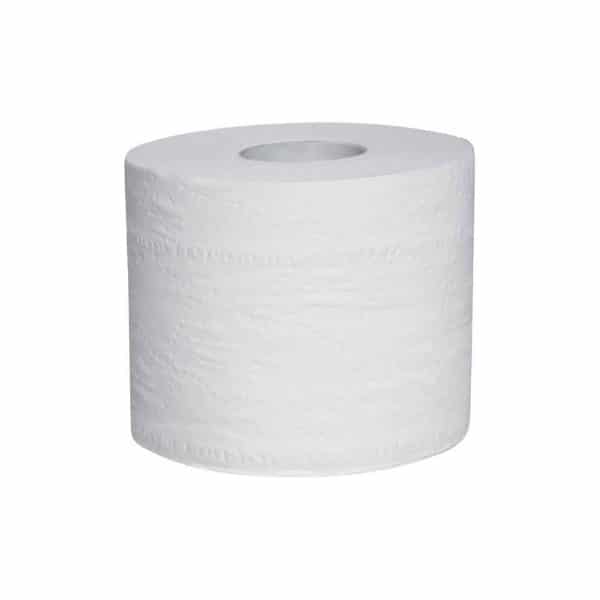
The humble toilet roll
BUT WHY TOILET PAPER?
Let’s face it, toilet tissue is not something at the forefront of everyday thinking. Professor Bruns says the product is not important. Widespread fear, uncertainty, and helplessness is what people focus on.
Behavioural economist David Savage suggests toilet paper was the second round of coronavirus panic buying. The first was hand-sanitizer. He predicts there will be a third round of intense buying but did not know what it will be.
Meanwhile, Paul Marsden, a consumer psychologist at the University of the Arts, London says it is down to “retail therapy—we buy to manage our emotional state.”
Marsden says, “It’s about taking back control in a world where you feel out of control. More generally, panic buying can be understood as playing to our fundamental psychology needs.”
He goes on to explain we need autonomy, or a need for control. Rather ‘me shopping’ it is ‘we shopping’ which gives a relationship to others. It also gives the feeling that bulk buying of this product means we are “smart shoppers”—a feeling we are competent when other are not.
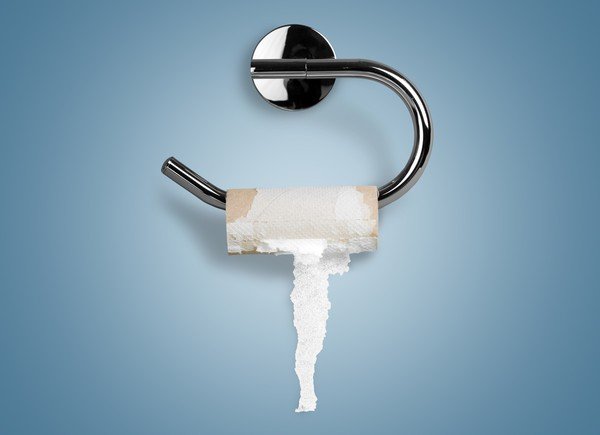
A spent toilet roll holder
SHOULD WE REGRET NOT STOCKING UP?
The answer is yes, according to David Savage. “Regret is a really powerful motivator. It actually makes us feel way worse than just loss.
Savage goes on to explain exactly how that works, “Not only is it missing out on something, it’s missing out on something that we had the choice to fix.”
IS IT UNIQUE TO AUSTRALIA?
The toilet paper buying madness is spreading. Similar scenes of shoppers scrambling to hoard toilet tissue have been seen in Singapore, Hong Kong, and the United Kingdom.
No one knows what toll this pandemic will take and at what cost to the global economy. One way to momentarily escape the burden of uncertainty is delving into the pages of a good book. Check these quality releases in the link below.











 Your Face Says a Lot About You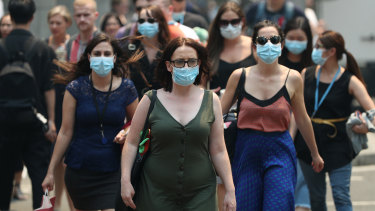










 ajhenryblog