

- Publisher: Zoe Rose Books; 2 edition (October 18, 2016)
- Publication Date: October 18, 2016
- Sold by: Amazon Digital Services LLC
- Language: English
- ASIN: B01M3S7YCE
- https://www.amazon.com.au/Revolutions-Caitlin-Kelman-Chronicles-Book-ebook/dp/B01M3S7YCE/ref=sr_1_1?s=digital-text&ie=UTF8&qid=1526899161&sr=1-1&keywords=the+revolutions+of+caitlin+kelman
The Revolutions of Caitlin Kelman by Matthew Luddon is the story of a teenager forced to ride a train from her provincial town of Riverton into the heartland of the Empire, Dominion City. Her parents have disappeared, and she hopes to find an uncle living in the city. Caitlin learns her real name is not Whitecliff but Kelman and her parents were revolutionaries fighting to unseat the Oligarchy who maintain power through an elite guard known by the acronym, SAFE.
A problem I had with the book is the lack of detail. Caitlin has little motivation other than survival blundering from one situation into the next. Neither is the reader privy to the inner thoughts and foibles of her character. For example, we are told her clothes and demeanor set her apart from city folk and reveal her as an outsider. There is little description of Caitlin’s appearance for the reader to understand why this is so?
The Empire has one billion souls. To put that in context, the population of Earth in 2018 was seven-point-six billion. The Empire is substantial. What Dominion City looks like, its structure and atmosphere of this future place, apart from a nineteenth century technology such as trains, does not evoke the reader’s imagination as would a Philip K. Dick novel.
We are reminded often enough that the Empire is crumbling, but not why. The reader is left to invent their own conclusions; a natural disaster be it from earth or the cosmos? It is hinted that the system is failing because of corruption throughout the ruling elite and this happens not over decades but within Caitlin’s life time. A comparison could be drawn with the 2015 Hellenic revolt against austerity measures imposed after Germany ransacked Mediterranean economies over decades. The difference being the anti-austerity movement had purpose and structure, seemingly vague in Caitlin’s revolution.
If we compare Cailtin to the celebrated revolutionary, Che Guevara who in liberating the poor left a legacy of murder, we have little insight into Cailtin’s reasoning. Guevara once wrote, “My nostrils dilate while savouring the acrid odour of gunpowder and blood. I’d like to confess, Papa, at that moment I discovered I really liked killing.” A telling insight into the mind of the man and we are not allowed such closeness with Caitlin Kelman.
As the story unfolds and details of the Kelman’s emerge, Caitlin’s justification in rebelling against the system and killing those who are against her is to avenge the suspected execution of her parents. This at first seems good grounds for her actions. But at no time does the author show sympathy for his character. We are not offered a flash back to happier times and there must have been occassions in contrast with the dismal present. We are not allowed a cherished moment with them to empathize with her lose. While Caitlin is hellbent on survival, she suffers no moments of grief or reflection. Caitlin’s character is devoid of emotion, and while the reader understands she must maintain self control, Caitlin is acting on instinct and as humans are emotional beings, such judgements must be clouded by sentiment.
The Revolutions of Caitlin Kelman is a readable book. Luddon uses sparse, to-the-point writing in telling his story. It offers enough twists to be interesting as long as credibility is swept aside and situations and motivation taken at face value. A novel worth investing time to engage in this interesting tale.

Book Review Banzai: The Unknown Author’s Ultimate Guide to Getting Amazon Reviews by Jason B. Ladd
Book Review Banzai is available on Amazon: ASIN: B072K3QKNX.
55 pages. Price $1.75
If you are reading this, chances are you are a writer; more specifically, a yet to be discovered one. Add to that, one who is about to dip their toes into the murky waters of self-publishing. Book Review Banzai outlines a course of action for new and established authors to follow in order to attract reviews of their books and alleviate the frustrations associated with self-published books.
Before delving into Book Review Banzai, the subject of selling books should be viewed in context with other ‘sure-fire’ ways to increase book sales that pepper the internet. Approaches to get the first ten-thousand readers in part rely on writers having one or more books published. The first book is offered for free whereby thousands of ‘bargain-hungry readers’ will claim copies of the book and upon finding back matter advertising the author’s next book, request a copy—all starry-eyed stuff.
Somewhere in the mix, email addresses are captured and offers emailed en masse see book sales go through the roof. Data and privacy is now an issue throughout the world. As of May 25, 2018, the GDPR (General Data Protection Regulation) comes into play in the EU member states. As data travels beyond borders, the move could affect other countries such as the US. Websites offering free books in exchange for email addresses collection may find an impact on their business. To read more: https://martechtoday.com/guide/gdpr-the-general-data-protection-regulation/
The reality of offering a book for free on Kindle Direct from unknown authors is readers borrow books, store them on digital bookshelves, and never read them. In an article published by Written Word Media, Amazon in January 2016, introduced KENPC v2.0 (Kindle Normalized Page Count). Authors are no longer paid per download, but on the number of pages: https://www.writtenwordmedia.com/2016/05/24/amazon-kdp-kindle-unlimited/.
Jason B. Ladd in Book Review Banzai takes a different approach whereby the number of book reviews influences a reader’s choice and has knock-on effects such as better Amazon rankings and acceptance by trusted sites such as BookBub.
Before selling a copy, or ten-thousand copies of your work, it is a good idea to know a little of what every author is up against in his or her quest to connect with an audience—and selling books is all about numbers. Amazon is coy about information at the best of times. According to Jeff Bercovici of Forbes Magazine around 7% of Amazon’s $5.25 Billion annual profit comes from book sales. His article can be read https://www.forbes.com/sites/jeffbercovici/2014/02/10/amazon-vs-book-publishers-by-the-numbers/#7a6ba01e4ef9
In 2016 some 1.1 million eBooks were published. Now here’s the curious thing: eBook sales are in decline compared to print books.
There are many theories as to why but according to Joe Biel, co-owner of Microcosm Publishing, “There are far too many eBooks… destroying sales in those genres… you must wonder why someone would enter the fray.” It is estimated there are 500,000 self-published authors through Amazon and a high portion are eBooks. https://microcosmpublishing.com/
Some authors believe the notion that more is better. Anxious to get a ‘free book’ published, take shortcuts. For example, a search on the history of the renowned band AC-DC reveals Wikipedias about the band, each member, and a number of their songs. Cut-and-pasting the contents of these sites could easily provide material for a book—albeit not an original one.
If you, the aspiring author burdened under the weight of numbers is thinking give-up, throw your hands in the air, and die, well that is an option. Having the gumption, tenacity, and perseverance to complete a book in the first place… possibly not a good one.
Which leads to testing Jason B. Ladd’s method of achieving book sales.
The author is quick to stress that writing a compelling story that is well edited is a priority. His method is not for those who have a partly finished book, or a story that needs further drafts.
In the first few chapters of Book Review Banzai acknowledge the realities of publishing a book—from the launch to ‘the great disappointment.’ Ladd then goes on to talk about his own struggle in finding a sale’s niche. I found this a down-to-earth approach refreshing compared to webinars from ‘six-figure earning’ authors who gloss over the hardest part—earning zero.
The book goes on to outline the Banzai Technique.
Part of the technique requires understanding spreadsheets to keep track of data used to get reviews. The next is finding reviewers.
Search engines throw up many bloggers who review books. All outline genres they enjoy and topics not considered. Reading such information is time-consuming and if you the aspiring author has done the same chances are you came across the deflating sentence found at the bottom of the page, “Not accepting unsolicited submissions at this time.” Ladd suggests a new approach to find indexes of blogger websites using customizable web scraping tools.
I tested one of the extraction tools, 80Legs, to find out if it delivered. The free version puts a limit of 10,000 crawls. I created 12 searches all with varying criteria. Maximum pages crawled for any of the searches was 4. Add to that the JSON text file giving me the URL address returned, “Error loading page”. I suspect I did not use the software correctly.
Another curiosity is BookBub accepting Book Review Banzai’s submission after previous rejections once it accumulated 87 reviews. A random check on BookBub’s site of around a dozen books revealed all had many reviews. It adds credence to the author’s claim that when it comes to acceptance by BookBub’s ‘editors’, it really is a numbers game. It begs the question when looking for entertainment from a book, does anyone have the patience to wade through more than 20 reviews?
For most people upon entering a bookshop or browsing online, the price of a novel is not the utmost consideration. Readers want a story that will remove them from the every day and perhaps touch their heart. A large majority purchase books for pleasure and not to review. Reviewers are dedicated folk who believe their contribution will add to the experience. And there’s the conundrum; so many books, so few reviewers.
Jason B. Ladd emphasizes that his technique for getting book reviews is ethical and warns against spamming individuals for a reply. The author has researched extensively and tested his method. Of the numerous books and webinars I’ve attended, this course of action is sound, though not perfect. More information about the author can be found on his website http://www.jasonbladd.com/
The Book Review Banzai formula is laid out in an easy to follow structure; the tone of writing crisp and informal. I believe the information outlined in the book is of interest and worth persevering with the technique, because Live Fully, Do Nothing is a book that will never be written.
Review by A. J. Henry

Los Angeles Lights (a Hollywood Billionaire Shifter Romance). By Avarice Rose.
Skylar Jones planned a quiet night in after a hard day at the rejection office in her job as a scriptwriter. Her friend Maya persuades her to go to a party where she meets heart-throb Zack Rider. Zack is perfection in a city where perfection sets a high standard. If you like stories set around characters with flaws who confront life-threatening situations manipulated by antagonists that embody evil, then this story is not for you. The plot is predictable with as much surprise as blowing bubbles through a straw into a glass of soda.
When Zack decides to share her table, Skylar soon becomes the envy of every Shifter groupie in the room. What follows is the usual romantic tryst that will not disappoint readers of this genre. The ending is left hanging and at no time is the protagonists ever challenged by the plot. A good read for those not looking for complex story structures.
Channeling Kate Logue on July 14, 2016 by Mike Bozart
I was drawn to read this book for reasons I don’t fully understand. For sure, it was not the awful cover design with typeface so close in tone to the background it is illegible. The subject intriguing: Breton the surrealist painter is having an affair with a woman suffering anosognosia (a brain disorder whereby the sufferer is not aware of physical disabilities). The story then morphs into a dream meeting with Kate, the painter’s mistress. It hints at a secret society. The writing is crisp, the dialogue exchange engaging and in character… the plot…unresolved. Like many books reviewed, the author has an idea for a story, but neither cares or has the patience to construct the tale to a satisfactory conclusion for the reader. This book promises so much. It wets the appetite but leaves the palate reminiscent of the cover–tasting of cheap claret.

John Laurie and the Rum Hospital on July 17, 2016. Justin Cahill
In writing this review of John Laurie and the Rum Hospital by Justing Cahill I have to concede a fascination for the colonial days of early Australian ‘white’ settlement. And in that respect, this slim volume by Cahill is a worthy read. John Laurie was convicted of larceny, transported to Australia, rose to become a wealthy trader, only to see his life turn and imprisoned in the notorious Moreton Bay penal colony. In the middle of his rise to fortune and falling from it, he was instrumental in building a new hospital for the fledgling settlement. Rum was a form of currency exchange in the early days. And unlike many infrastructures of today, this project was a win, win for the government. “Yet the contractors themselves declared they had suffered a loss of about £2500. There was probably only one winner in the Rum Hospital saga: the New South Wales Government. It received a new hospital and £9000 in duty on the rum the contractors imported. The only expense was £4200 for the provision of labour and livestock, leaving it ahead by one hospital and about £4800.” The cover of Cahill’s book is a reported picture of Laurie looking a benevolent figure, but Laurie was that and much more. He was somewhat of a scoundrel, an optimistic, energetic one at that. “In 1824, John bought the Fame, a schooner, and fitted her out for a trading trip to Newcastle. He hired a rowboat, the Pullfoot, to load her. Instead of returning the Pullfoot, he took it on board, sailed out through the Heads and went south.” This easy to read volume would do well in classrooms where history and the colourful people who shaped it is discovered. As Cahill surmises: “He and Sarah proved the ‘Fatal Shore’ was a place of opportunity and left many proud descendants living throughout Australia, New Zealand, and Canada to ponder at their achievements ” .
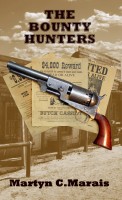
The Bounty Hunters on July 19, 2016. Martyn C. Marais.
I’m not a fan of the Western genre as such, but I got hooked on this one. Marais has all the ingredients and then some for a good story. Characters with colourful pasts such as a fake priest and a dandy gunslinger named Tidy. Marais also has a keen eye for detail and gives the impression he has spent time with horses rather than watching one from the side rails of a race track. The suspense builds to the moment when we meet a retired Texas Ranger.
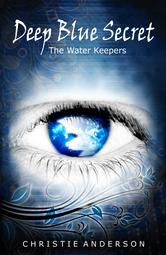
Deep Blue Secret (The Water Keepers Book 1) by Christie Anderson, 2012.
Sadie lives with her mother in Southern California. Her father is missing though explained later in the story. Her life appears normal—the everyday concerns of a senior school student. She attracts the unwanted attention of Justin Crane until the class hunk Nick Christensen asks her for a date. Sadie’s life looks to fall into place until the accidental meeting of a mysterious boy, described as ‘a glint of light caught his eye, causing a stream of little green sparks’.
Although Anderson captures the besotted emotions of teenage Sadie, infatuated by the boy with ‘mysterious green eyes’ and perfect skin, she falls short of creating dimensional characters. Likewise, her descriptions of place are too sparse and cliched to capture the reader’s imagination. Crystal Cove is the possible exception and the reader gets the impression Anderson knows this place.
Sadie suffers bouts of depression. After climbing onto a rock at the beach in Crystal Cove, she is swept into the sea and knocked unconscious. She is rescued by her mysterious friend. ‘The eyes from my dreams now hovered over me…they were like aqua diamonds’. Despite Sadie’s best efforts, her rescuer does not fall for her and leaves at the shuttle stop.
The story turns abruptly from Sadie’s deep affections to Voss, an inmate surviving in an ‘inhumane’ colony for criminals. And this is where the plot gathers momentum. Cayno is not an ordinary prison. All who go there pass through the ‘thresh-hold’. Criminals sentenced to Cayno are doomed to die. Voss survives because of a stone implanted near his heart. He also has a tear-shaped Watermark on his wrist which once was blue, now turned black (a sign of all who have the water). Voss escapes the impenetrable thresh-hold by capturing a guard in a simple trap—the reader wonders why none of the numerous inmates had thought of it before. The fugitive goes on to live a charmed life in his beachside manor—he drives a McLaren and enjoys the trappings of wealth. At this point in the story, the plot becomes a little thin. The reader is told Voss has a leathery face and is evil, but at no point is his evil deeds outlined. We also learn he was highly ranked in the Ambassador Council, his son, Ash attending the Academy to become a Scout.
While Deep Blue Secret hints at a supernatural society living amongst the ordinary populace and who are keepers of Healing Water, it fails to explain its logic. Guards who captured Voss and imprisoned him make no attempts to hunt him down and return him to Cayno.
The mysterious boy is Rayne Stevens. He is Sadie’s guardian, has been since she was seven, and lives across the street from her house. Rayne is old, but the waters keep him youthful. The same waters save Sadie after a horrific car crash in which she should have died. It appears Sadie’s mother was saved from cancer while pregnant exposing Sadie to small amounts of Healing Water. Now, Sadie needs the water to live.
A problem with Deep Blue Secret is the fantasy stops short of fantastic. Voss has no powers to carry out his evil and as such feels as threatening as cotton socks. Even when he abducts Sadie in order to force Rayne to do his bidding, she is treated well. Voss is defeated by Rayne in good old fisty-cuffs that would not be out of place in a school yard. Missing is the wizard duels and powerful overlords with the means to destroy life as we know it. Keepers are benevolent, and even though Rayne is in breach of the code when his feelings for Sadie run deeper than that of guardian, he is never threatened or punished. Hamlin his boss reveals his secret in the end, but the reader can’t help feeling the jeopardy for Rayne’s wayward emotions could have been higher.
The style on occasions is flowery. Instead of a direct ‘Voss left the room’ we have ‘After Voss removed himself from the room…’ Or, ‘the shimmering eyes glistened at my bedside like two moons in a starry sky’. Deep Blue Secret will appeal to fans of the fantasy romance genre.

Thundersnow by Lavern Le’Clore
Professor Lea Kell accompanies a student Adeline Beltz on a field study. They are guided throughout a steep climb by experienced guide Armin. They misread an Asperitas cloud formation and become trapped in a treacherous storm. This is where this well-researched story has credibility issues. Hydrology and meteorology are interdisciplinary fields of science. Their guide fears the weather will turn, and the reader would expect the academics to understand weather, especially as they have access to satellite information. Mistakes happen but Le’Clore could have played on this. Intellectual vanity, the arrogance over common sense—either Kell or Beltz needed personality flaws that pushed them into danger over and above sound judgment (to get down from the mountain as quickly as possible). Their mistake ushers dire consequences for themselves and the rescuers. The reader is given little insight into the personality of rescue officer Dietrich Jagger. What attributes or desires drive Jagger to put his life on the line? Had this been a Hollywood story, Dietrich and Adeline would be embroiled in a love interest—older man seduces young university student, for example? Thundersnow is a well-written story with suspense and adversity. Had it been longer with scope to develop characters and their relationship in the context of the story, it could be a great one.

The Firefly League (A Lighthouse Saga Companion Story) S.G.Basu
Firefly League opens with much promise. A sci-fi novel balanced between other worldliness and the prejudices all too familiar in this one.
Maks returns home to the tiny village of Appian on Planet Tansi. The Solainese are land dwellers and once a mighty empire. Rebels now control the population via Directives—a form of censorship cum propaganda to keep residents informed of what the rebels need them to know and what they can or can’t do.
Poachers have raided forests on the Western rim in Lauden’s acreage. Although villagers set patrols, their efforts to stop tree thieves are in vain. Makes, along with Amen and Nisa set up a series of dugouts. Mirrors and telescopes are devised to relay messages via a type of Morse code.
A girl spies on them, discovered by Maks near the grey face-like monoliths marking the dugouts. Maia is the girl mysteriously taken by Xifarian intergalactic nomads for the Tri-Nation Peace Games. Because Maia has been in both camps and experienced more than the Solainese, she casts doubt on the validity of certain Directives. This cause friction as Nisa, a life-long friend of Maks, believes in the rebels with unquestioning loyalty.
Firefly League leaves the reader puzzled. Although the trees are important to the guardian folks of Appian, why are they poach worthy to others? When Chas is caught with seedling—illegal contraband—he sells them for just a few copper coins each, suggesting the saplings are worthless. If for example, the Xifarians wanted trees and have superior technology to the low-tech Solainese, why not just take them?
This edition, though well written with ingredients for a good sci-fi tale, present little in the way of drama. For those seeking stand-alone entertainment with a story reaching a satisfying end, will not enjoy this one. On the other hand, readers willing to follow other books in the series, Firefly League is a good start.
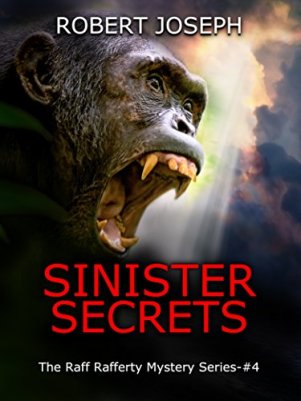
Sinister Secrets: Robert Joseph
Apart from a sprinkling of typos, there is little to fault in this book—solid storytelling along the lines of Michael Crichton. Believable characters with attention to plotting and comprehensive research. The story opens in Cameroon where Dr. Henry Hammel buys Violet, a chimpanzee carrying the highly contagious Mbuko virus.
A cherry red Corvette dumps the feverish body of a man at the door of Ryan Medical Centre. After the man’s death from a mysterious virus, hospital Chaplin Gabriel Rafferty (Raff) along with nurse Dan Miller track down the driver of the car. Stripper Mikki Maguire admits she took Douglas Osborne to the centre. Not long after, Maguire is also stricken with illness. Amir Hallaby, a brilliant pathologist, once worked for Hammel but left after a falling out. His research is taken up by benefactor Regina Ryan—philanthropist of Ryan Medical Centre. Amir is also a good friend of Raff. Father Raff in attempting to solve the Mbuko epidemic raging throughout Seattle is drawn into the web of Anja Krammer, wealthy pharmaceutical mogul, and billionaire Sven Olafsson. The relationship between Hammel, Krammer, and Olafsson is a dark history.
Sinister Secrets goes on to expose maniacal ambitions that, in a world drifting to extreme ideologies, has disturbing credibility–sins of the past forgotten, only to be repeated. A few minor things bugged me about the story. It seems Joseph needs to constantly remind the reader that Anja is an attractive and desirable woman putting temptation in the way of a celibate Raff. Most will get the idea—though reasons behind this unlikely attraction come to a head later in the story. Father Rafferty, an ex-cop, gets only passing reference to his priestly duties. Catholic religion is imbued with ritual, celebrating mass, administering last rites, and so on. In times of crisis—such as a deadly epidemic in a populous city—the clergy is sought for solace and guidance. Raff comes across more ex-cop than priest.
All of which is of minor consequence in the unfolding of this engrossing book by Robert Joseph. It deserves a place in the ‘good read’ category and a worthy spot on reader’s bookshelves.
 ajhenryblog