

Award-winning writer, Will Storr looks at the question of reality, and how our brains show it to us. Storr claims, “In order to tell the story of your life, your brain needs to conjure up a world for you to live inside, with all its colours, and movements, and objects, and sounds. Just as characters in fiction exist a reality that’s been actively created, so do we.”
Whoa! Wait a minute? What was that? A big call for many of you reading this blog: reality and our existence in it is a story we make up? To test if there is any truth in this wild claim, we have to go back to the years 1868 through to 1892 in Great Britain. The Prime Minister William Ewart Gladstone noticed something bizarre in Homer’s Odyssey.

The Ancient Greek poem about Odysseus, the king of Ithaca, and his journey home after the Trojan War is considered the oldest piece of literature still read today. Odysseus’ return takes some ten years encountering many dangers, one of which was angering Poseidon, the god of the sea. Gladstone noticed there was no mention of the colour ‘blue’ in the poem. Homer describes the ocean as ‘wine-dark’ but never blue.

A psychologist from Goldsmiths University of London, Professor Jules Davidoff discovered the Himba tribe in Namibia had no word for ‘blue’ in their language. He embarked on a series of tests to find out if they could see the colour. Davidoff created a circle of eleven green squares with one stark blue square and showed it to the Himba group. Those who took part struggled, and many made mistakes in identifying the blue square.

Further to this idea that reality is something we invent is the work of Ellen Langer, PhD. Langer joined the faculty at Harvard University in Social and Clinical Psychology in 1977. Her ground-breaking study in 1979 called Counterclockwise was repeated by the BBC in 2010 in a series called The Young Ones. The idea was simple. Take six aging has-been celebrities and convince them they are young.
The septuagenarians spent time in a country house where everything was retrofitted to the year 1975 with nothing to suggest it was thirty-one years into the future. All results were astounding. As a whole, the group walked taller and even looked younger. One confined to a wheelchair, ditched it for a walking stick. Another, who couldn’t complete the simple task of pulling on their socks and shoes, was gliding around guests at a dinner party.

How is it possible that people in their seventies could reverse the frailty of aging without drugs or radical gene-replacement therapy?
If we can believe Will Storr and Martin Seligman, it is because their brains told them they were no longer old, but young.
Storr goes some way to explain why our reality is not what it seems. “The hallucinated reconstruction of reality is sometimes referred to as the brain’s ‘model’ of the world. Our senses seem incredibly powerful: our eyes windows through which we observe… our ears open tubes into which noises of life freely tumble. But this is not the case. They actually deliver only limited and partial information to the brain.”

In reality, colour does not exist in the universe and neither sound. Three different cones–L, M, and S–in our eyes (some six to seven million photoreceptor cells in the retinas of vertebrates) convert waves in the visible light spectrum into red, green, and blue. Changes in air pressure react with the tympanic membrane, known as the eardrum, sending signals to our brain. Our brain interprets those signals as either a crash or a bird’s twitter.
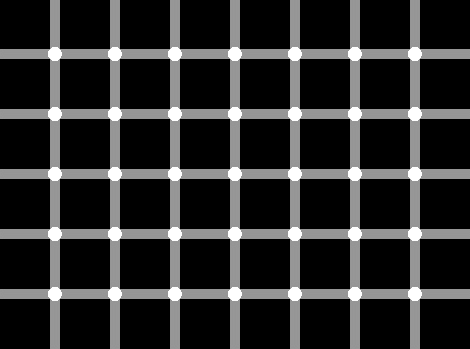
We know our eyes are fooled by optical illusions.
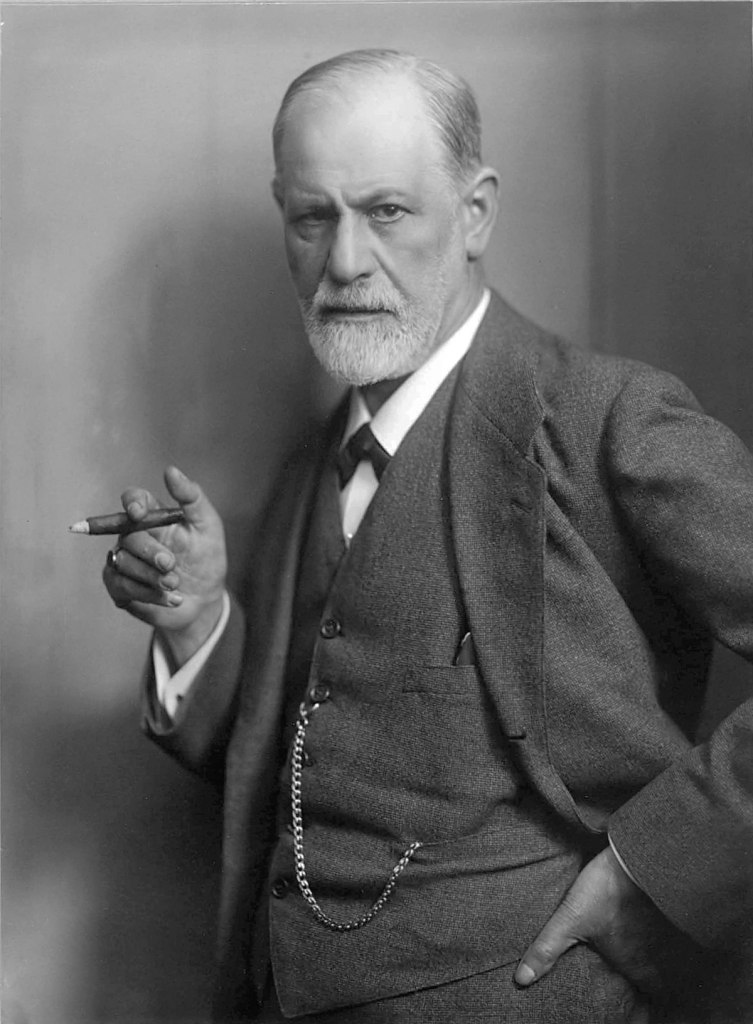
During the 1960s, psychologists questioned much of Freud’s approach to psychoanalysis. Freud proposed that mental suffering was some vile part of us. “Your most loathsome inner secrets are what is most basic to you.”
Psychologist Aaron T. Beck, regarded as the father of cognitive therapy, sees things differently. Beck argues from an entirely opposite approach. He claims, “Depression is neither bad brain chemistry nor anger turned inward. It is a disorder of conscious thought.”
If the world is a place we create in our heads, then those early advocates of self-help might be on to something: what we tell ourselves is what we will become. Modern historians do not hold Napoleon Hill in good stead. Many doubt his claim to have met the advertising guru, Andrew Carnegie. The design, technology, and science website, Gizmodo, said of Hill, “the most famous conman you’ve probably never heard of.”
Hill said, “Anybody can wish for riches and most people do, but only a few know that a definite plan, plus a burning desire for wealth, are the only dependable means of accumulating wealth.” Is this an accurate statement, or is it a fact that people who devote their time to money (instead of playing sport or exploring continents) accrue more wealth?

In the next installment, we look at experiments conducted by American psychologist Peter Seligman and author of several self-help books who proved we can teach ourselves many things, including learning to be helpless.
 ajhenryblog
Fascinating stuff, AJ. I can’t wait to read more. Or is that just my reality believing it is fascinating. Whatever I look forward to the next post.
LikeLike
Hi Forestwood, I’ve been reading this stuff and attending various uni courses for some years now. I should imagine it is not everyone’s cup of tea and a few of my friends believe we are born with what we have and that is it–and I’m a nut-case for thinking otherwise. I’m glad you find it interesting. Kind Regards
LikeLike